America 's Muslims Aren't as Assimilated as You Think
By Geneive Abdo
Washington Post, August 27, 2006
If only the Muslims in Europe -- with their hearts focused on the Islamic world and their carry-on liquids poised for destruction in the West -- could behave like the well-educated, secular and Americanizing Muslims in the United States , no one would have to worry.
So runs the comforting media narrative that has developed around the approximately 6 million Muslims in the United States, who are often portrayed as well-assimilated and willing to leave their religion and culture behind in pursuit of American values and lifestyle. But over the past two years, I have traveled the country, visiting mosques, interviewing Muslim leaders and speaking to Muslim youths in universities and Islamic centers from New York to Michigan to California -- and I have encountered a different truth. I found few signs of London-style radicalism among Muslims in the United States . At the same time, the real story of American Muslims is one of accelerating alienation from the mainstream of U.S. life, with Muslims in this country choosing their Islamic identity over their American one.
A new generation of American Muslims -- living in the shadow of the Sept. 11, 2001 , attacks -- is becoming more religious. They are more likely to take comfort in their own communities, and less likely to embrace the nation's fabled melting pot of shared values and common culture.
Part of this is linked to the resurgence of Islam over the past several decades, a growth as visible in Western Europe and the United States as it is in Egypt and Morocco . But the Sept. 11 attacks also had the dual effect of making American Muslims feel isolated in their adopted country, while pushing them to rediscover their faith.
From schools to language to religion, American Muslims are becoming a people apart. Young, first-generation American Muslim women -- whose parents were born in Egypt, Pakistan and other Islamic countries -- are wearing head scarves even if their mothers had left them behind; increasing numbers of young Muslims are attending Islamic schools and lectures; Muslim student associations in high schools and at colleges are proliferating; and the role of the mosque has evolved from strictly a place of worship to a center for socializing and for learning Arabic and Urdu as well as the Koran.
The men and women I spoke to -- all mosque-goers, most born in the United States to immigrants -- include students, activists, imams and everyday working Muslims. Almost without exception, they recall feeling under siege after Sept. 11, with FBI agents raiding their mosques and homes, neighbors eyeing them suspiciously and television programs portraying Muslims as the new enemies of the West.
Such feelings led them, they say, to adopt Islamic symbols -- the hijab , or head covering, for women and the kufi , or cap, for men -- as a defense mechanism. Many, such as Rehan , whom I met at a madrassa (religious school) in California with her husband, Ramy , also felt compelled to deepen their faith.
"After I covered, I changed," Rehan told me. "I felt I wanted to give people a good impression of Islam. I wanted people to know how happy I am to be Muslim." But not everyone understood, she said, recalling an incident in a supermarket in 2003: "The man next to me in the vegetable section said, 'You'd be much more beautiful without that thing on your head. It's demeaning to women.' " But to her the head scarf symbolized piety, not oppression.
A group of young college-educated women at the Dix mosque in Dearborn , Mich. , described the challenges many Muslims face as they carve out their identity in the United States . I spoke with them in the winter of 2004, after they had been to the mosque one Sunday for a halaqa (a study circle) focused on integrating faith and daily life. They were in their twenties: Hayat, a psychologist; Ismahan , a computer scientist; and Fatma , a third-grade teacher.
Hayat said veiling was easier for her than it had been for her sister,
10 years her senior, because Hayat had more Muslim peers when she reached high school and felt far less pressure to conform to American ways. When she went on to the University of Michigan , she was surrounded for the first time by young Muslims who dared to show pride in their religion in a non-Muslim setting.
Ismahan recalled similar experiences. In elementary school, she had tried to fit in. As an adult, though, "I know I don't have to fit in," she said. "I don't think Muslims have to assimilate. We are not treated like Americans . At work, I get up from my desk and go to pray. I thought I would face opposition from my boss. Even before I realized he didn't mind, I thought, 'I have a right to be a Muslim, and I don't have to assimilate.' "
Fatma described the mosque as central to her future: "What made me sane during years of public high school," she said, "was coming to the halaqa every Sunday." Fatma was also quick to distinguish herself from other young Muslim women who embrace American mores. "Some Muslims do anything to fit in. They drink. They date. My biggest fear is that I might assimilate to the American lifestyle so much that my modesty goes out the window."
Imam Zaid Shakir -- who teaches at San Francisco 's Zaytuna Institute, America 's only true madrassa -- refers to such young Muslims as the " rejectionist generation." They are rejectionist , he says, because they turn their backs not only on absolutist religious interpretations, but also on America 's secular ways. Many of these young American Muslims look to Shakir (and to celebrated Zaytuna founder Hamza Yusuf ) for guidance on how to live pious lives in the United States .
I spent several days at one of the institute's "mobile madrassas ," this one in San Jose , and watched hundreds of young Muslim professionals sit on cushioned folding chairs and listen intently as Yusuf delivered his lecture. "Everywhere I go, I see Muslims," he told them. "Go to the gas station and the airport. Muslims are present in the United States , and that was not true 20 years ago. There are more Muslims living outside the Dar al-Islam [Islamic countries, or literally the House of Islam] than ever. So we have to be strategic in our thinking, because people who are our enemies are strategic in their thinking."
The "enemies" Yusuf referred to that day were not non-Muslims, but rather those who use Islam as a rationale for violence. For the students at this madrassa and for many Muslims I interviewed, their strategy focuses on public displays of their faith.
Being ambassadors of Islam is daring behavior when you consider that American Muslims live in a country where so many people are ignorant of -- if not hostile to -- their faith. In a Gallup poll this year, when U.S. respondents were asked what they admire about the Muslim world, the most common response was "nothing" (33 percent); the second most common was "I don't know" (22 percent).
Despite contemporary public opinion -- or perhaps because of it -- Muslim Americans consider Islam their defining characteristic, beyond any national identity. In this way, their experience in the United States resembles that of their co-religionists in Europe , where mosques are also growing, Islamic schools are being built, and practicing the faith is the center of life, particularly for the young generation. In Europe and the United States, young Muslims are unifying around popular imams they believe understand the challenges they face in Western societies; these leaders include Yusuf in the United States and Amer Khaled, an Egyptian-born imam who lives in Britain. Thousands of young Muslims attend their lectures.
In my years of interviews, I found few indications of homegrown militancy among American Muslims. Indeed, thus far, they have proved they can compete economically with other Americans . Although the unemployment rate for Muslims in Britain is far higher than for most other groups, the average annual income of a Muslim household surpasses that of average American households. Yet, outside the workplace, Muslims retreat into the comfort zone of their mosques and Islamic schools.
It is too soon to say where the growing alienation of American Muslims will lead, but it seems clear that the factors contributing to it will endure. U.S. foreign policy persists in dividing Muslim and Western societies, making it harder still for Americans to realize that there is a difference between their Muslim neighbor and the plotter in London or the kidnapper in Baghdad .
geneive.abdo@geneiveabdo.com
Geneive Abdo is the liaison for the Alliance of Civilizations at the United Nations and author of " Mecca and Main Street : Muslim Life in America After 9/11" ( Oxford ).
Thursday, August 31, 2006
Iran's Centrifuge Program: Defiant but Delayed:ISIS
Iran's Centrifuge Program: Defiant but Delayed
By David Albright and Jacqueline Shire
August 31, 2006: The Institute for Science and International Security (ISIS)
Despite Iran failing to meet U.S. Security Council demands to halt enrichment, progress at Natanz is slower than expected.
Iran has made limited progress at its Natanz uranium enrichment plant, installing and operating fewer gas centrifuges than expected. Senior Vienna-based diplomats have confirmed to ISIS that Iran may be either delaying deliberately the pace of its work while diplomatic efforts are underway, or is experiencing technical problems with its centrifuge program. It continues to conduct small experiments, and to operate a 164-machine cascade with uranium hexafluoride, but it is not operating this cascade consistently over a sustained period. ISIS has reported previously that Iran appears to be operating the cascade at reduced efficiency and output, yielding smaller quantities of low enriched uranium.
Iran has also failed to install as many cascades in the Natanz pilot plant as expected. In April 2006, U.S. government and IAEA officials expected Iran to have installed five cascades, each containing 164 centrifuges, by August 2006 at Natanz's pilot fuel enrichment plant (PFEP). (The PFEP is configured to hold a total of six cascades, but one "slot" holds five and ten machine cascades).
It now appears that Iran has not begun to operate the second and third cascades at the pilot plant, although they may be close to completion. There is no indication that Iran is close to installing the fourth and fifth cascades. To demonstrate proficiency in cascade operations, Iran must run these cascades together for an extended period of time.
Iran informed the IAEA of plans to begin installation of the first 3,000 centrifuges at Natanz's underground halls by the last quarter of 2006. It now appears that Iran will also not meet this deadline. It is possible that Iran's leadership has deferred installation out of concern that the facility would be a target of military strikes should diplomacy fail to resolve the nuclear issue. It is also possible that Iran has prepared undisclosed facilities for research and development of uranium centrifuges and deployment of additional cascades, although no evidence of such facilities currently operating has emerged from IAEA inspections.
By David Albright and Jacqueline Shire
August 31, 2006: The Institute for Science and International Security (ISIS)
Despite Iran failing to meet U.S. Security Council demands to halt enrichment, progress at Natanz is slower than expected.
Iran has made limited progress at its Natanz uranium enrichment plant, installing and operating fewer gas centrifuges than expected. Senior Vienna-based diplomats have confirmed to ISIS that Iran may be either delaying deliberately the pace of its work while diplomatic efforts are underway, or is experiencing technical problems with its centrifuge program. It continues to conduct small experiments, and to operate a 164-machine cascade with uranium hexafluoride, but it is not operating this cascade consistently over a sustained period. ISIS has reported previously that Iran appears to be operating the cascade at reduced efficiency and output, yielding smaller quantities of low enriched uranium.
Iran has also failed to install as many cascades in the Natanz pilot plant as expected. In April 2006, U.S. government and IAEA officials expected Iran to have installed five cascades, each containing 164 centrifuges, by August 2006 at Natanz's pilot fuel enrichment plant (PFEP). (The PFEP is configured to hold a total of six cascades, but one "slot" holds five and ten machine cascades).
It now appears that Iran has not begun to operate the second and third cascades at the pilot plant, although they may be close to completion. There is no indication that Iran is close to installing the fourth and fifth cascades. To demonstrate proficiency in cascade operations, Iran must run these cascades together for an extended period of time.
Iran informed the IAEA of plans to begin installation of the first 3,000 centrifuges at Natanz's underground halls by the last quarter of 2006. It now appears that Iran will also not meet this deadline. It is possible that Iran's leadership has deferred installation out of concern that the facility would be a target of military strikes should diplomacy fail to resolve the nuclear issue. It is also possible that Iran has prepared undisclosed facilities for research and development of uranium centrifuges and deployment of additional cascades, although no evidence of such facilities currently operating has emerged from IAEA inspections.
Wednesday, August 30, 2006
Pakistani intelligence services and their contributions!

Intelligence reports hurting careers of civilian bureaucrats
By Ansar Abbasi
The News, August 30, 2006
ISLAMABAD: Reports by intelligence agencies continue to cast a shadow over the careers of civilian bureaucrats, the latest evidence of which was provided by the recent high-powered promotion board meetings that recommended supersession/deferment of different officers, who slipped in the eyes of the spies.
Sources said that during its two days (Aug 28-29) consideration of high-level promotions, the Central Selection Board (CSB) superseded or deferred officers on the basis of intelligence reports.
In certain cases, where one or more members of the CSB on the basis of their personal knowledge challenged the credibility of the agencies' reports on officer(s), the board ignored the intelligence stories and recommended the concerned officers' elevation to higher grade.
In some cases, where there was division in the board about the authenticity of the intelligence report, the CSB recommended deferment of the concerned officers.
At the same time, the CSB sought fresh reports from intelligence agencies on the officers for consideration in the next board meeting.
A source said the board discussed the issue of intelligence reports, which, in many cases, are believed to be biased, subjective and not based on fact
Consequences of Bugti Murder: Ahmed Rashid's Analysis
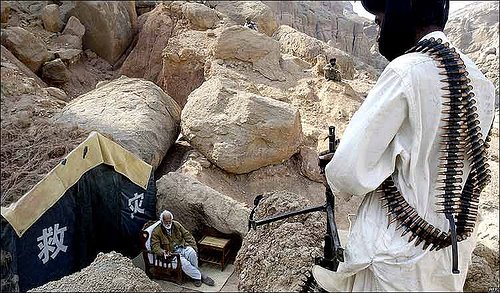
Extracts from
Rebel killing raises stakes in Pakistan
Ahmed Rashid
BBC August 30, 2006
Senior politicians say that Mr Musharraf's lack of understanding about the Baloch issue, his underestimation of the growing sense of alienation in all the smaller provinces and the attack on his ego when his helicopter was fired upon by Baloch rebels last December, all contributed to his helping him take the decision to kill Bugti.
The army argues that millions have been spent in development, but projects such as the building of the Gawadar port, the building of cantonments and even new roads do not necessarily benefit ordinary Baloch.
The projects are defined by the army and its national security needs, rather than through consultations with the Baloch or even the Balochistan provincial assembly. Then the projects are carried out by outside companies who give few jobs to the Baloch.
There is an ever-deepening political crisis in Pakistan which the death of Bugti will only exacerbate.
Many people say that the country is rapidly unravelling with Mr Musharraf refusing to give clear-cut guarantees about free and fair elections next year, while he insists on running again for another five-year term as president even as he remains army chief.
For complete article, click here
Future of Pakistan?
Extracts from
WASHINGTON DIARY: A murder foretold? —Dr Manzur Ejaz
Daily Times, August 30, 2006
We were sharing the experiences of an expert from an international organisation who has recently visited Pakistan and some areas of Afghanistan. When someone broke the news of Nawab Akbar Bugti’s killing, it seemed to be part of his presentation to be fully revealed to the audience after a prologue. As if it was to prove his point that Pakistan’s map may go through changes in the not-too-distant future.
He disclosed that he had been to several seminars where international speakers mentioned Balochistan and the North West Frontier Province (NWFP) as part of Central Asia and Sindh and Punjab as part of Indian civilisation. He was asked about a recent article by Peter Ralph that discussed new alignments in the region, however he had not heard about it, and emphasised that he was not referring to a single person or a single seminar but an emerging pattern of thinking which indicated that, sooner or later, the civilisation factor will assert and redraw the map of Pakistan.
He was not very optimistic about the union of Sindh and Punjab either. The pace and patterns of development were so divergent and disparate, he said, that ultimately the gulf between two provinces would widen. Because of better management and in the absence of ethnic contradictions Punjab was growing much faster while rampant corruption, incompetence and inaction held Sindh back. The province was completely paralysed. And irrespective of whether Punjab capitalises on its indigenous resources or outside help, Sindhis on Lahore’s roads are going to smell their blood and sweat.
Unlike the past years he was very appreciative of the present institutional set-up in the Punjab. All international institutions and their experts, he informed us, wanted to work with the Punjab and lend it money. Most of the consultants and experts from international organisation preferred to stay in Lahore and work from there. Being assigned to a project in Sindh or Balochistan was considered a punishment. In his view, this was due to visible changes in government functioning and getting the visible results that every project manager is appraised for.
For complete article clic here
WASHINGTON DIARY: A murder foretold? —Dr Manzur Ejaz
Daily Times, August 30, 2006
We were sharing the experiences of an expert from an international organisation who has recently visited Pakistan and some areas of Afghanistan. When someone broke the news of Nawab Akbar Bugti’s killing, it seemed to be part of his presentation to be fully revealed to the audience after a prologue. As if it was to prove his point that Pakistan’s map may go through changes in the not-too-distant future.
He disclosed that he had been to several seminars where international speakers mentioned Balochistan and the North West Frontier Province (NWFP) as part of Central Asia and Sindh and Punjab as part of Indian civilisation. He was asked about a recent article by Peter Ralph that discussed new alignments in the region, however he had not heard about it, and emphasised that he was not referring to a single person or a single seminar but an emerging pattern of thinking which indicated that, sooner or later, the civilisation factor will assert and redraw the map of Pakistan.
He was not very optimistic about the union of Sindh and Punjab either. The pace and patterns of development were so divergent and disparate, he said, that ultimately the gulf between two provinces would widen. Because of better management and in the absence of ethnic contradictions Punjab was growing much faster while rampant corruption, incompetence and inaction held Sindh back. The province was completely paralysed. And irrespective of whether Punjab capitalises on its indigenous resources or outside help, Sindhis on Lahore’s roads are going to smell their blood and sweat.
Unlike the past years he was very appreciative of the present institutional set-up in the Punjab. All international institutions and their experts, he informed us, wanted to work with the Punjab and lend it money. Most of the consultants and experts from international organisation preferred to stay in Lahore and work from there. Being assigned to a project in Sindh or Balochistan was considered a punishment. In his view, this was due to visible changes in government functioning and getting the visible results that every project manager is appraised for.
For complete article clic here

Tuesday, August 29, 2006
A Patriotic Act
Nasim Zehra's Statement Declining Acceptance of Sitara-i-Imtiaz
To protest the dreadful act of the killing of a Pakistani political leader Sardar Akbar Bugti by Pakistan's security forces, I decline to accept the Sitara-i-Imtiaz for which I was nominated by the President of Pakistan on August 14. It is with deep personal regret that I take this decision since national awards are a symbol of honor and a matter of immense pride and gratitude. At this juncture protesting the State's proclivity to opt for use of force to settle complex political problems, must take precedence over matters of personal consideration.
Unfortunately in the latest round of a two year long Baluchistan-Centre crisis those elements finally won on August 26 who all along believed that force was the way to settling the current crisis. The militaristic elements trumped those within the system who were pushing for a political resolution through the Parliamentary Committee on Baluchistan.
Clearly our foremost task in Pakistan is to strengthen civilian political forces which believe in the rule of law and understand the need to resolve Pakistan's internal problems through consensus and reconciliation. In ignoring these principles we have committed three cardinal blunders. First alienation of East Pakistanis leading to the tragic breakup of Pakistan , the judicial murder of an elected Prime
Minister and now the killing of another prominent political leader. We must make every effort to institute the required checks and balances in the exercize of power that would avoid repeat of such blunders.
To protest the dreadful act of the killing of a Pakistani political leader Sardar Akbar Bugti by Pakistan's security forces, I decline to accept the Sitara-i-Imtiaz for which I was nominated by the President of Pakistan on August 14. It is with deep personal regret that I take this decision since national awards are a symbol of honor and a matter of immense pride and gratitude. At this juncture protesting the State's proclivity to opt for use of force to settle complex political problems, must take precedence over matters of personal consideration.
Unfortunately in the latest round of a two year long Baluchistan-Centre crisis those elements finally won on August 26 who all along believed that force was the way to settling the current crisis. The militaristic elements trumped those within the system who were pushing for a political resolution through the Parliamentary Committee on Baluchistan.
Clearly our foremost task in Pakistan is to strengthen civilian political forces which believe in the rule of law and understand the need to resolve Pakistan's internal problems through consensus and reconciliation. In ignoring these principles we have committed three cardinal blunders. First alienation of East Pakistanis leading to the tragic breakup of Pakistan , the judicial murder of an elected Prime
Minister and now the killing of another prominent political leader. We must make every effort to institute the required checks and balances in the exercize of power that would avoid repeat of such blunders.
Fiction from the Frontlines of War on Terror
Fiction from the Frontlines
Newsline, August 2006
Journalists cashed in on the demand for sensational stories during the US-led war in Afghanistan by interviewing fake Taliban and Al Qaeda members and quoting "anonymous" sources.
By Amir Zia
Islamabad 2001: A Pakistani journalist was urging a retired army officer on telephone to pose as a serving Inter-Services Intelligence official and give an interview to the bureau chief of a leading western wire agency as an anonymous source. After arguing with the retired official for several minutes in a mix of Urdu and Punjabi, the journalist finally called out to his bureau chief saying that his ISI source was on the line.
An hour after the telephone interview, the western agency filed a sensational story about the divide within the ranks of Pakistan's military establishment and ISI's opposition to President Pervez Musharraf's decision to withdraw support to the Afghan Taliban.
The story was a hit - and so was the stringer who arranged the fake interview.
As hundreds of foreign correspondents descended on Islamabad, Peshawar, Quetta, and some, even Karachi, to report on the war in Afghanistan and terrorism, a new breed of journalists, known usually as "fixers," and stringers, got unprecedented importance.
The majority of foreign journalists were unable to go inside Afghanistan to cover the war and were desperately trying instead, to find some exciting stories from within Pakistan. Small pro-Taliban rallies were being blown out of proportion and many Pakistani stringers were aiding them in procuring quotes from "anonymous" army, intelligence and interior ministry officials to support their pre-conceived stories about Pakistan and its role in terrorism.
In addition, "fake" interviews with the Taliban and Islamic militants were also conducted.
The task of genuine journalists, who wanted to file only factual stories, was becoming increasingly difficult because they were competing against these sensationalist stories.
Often reputed foreign newspapers and wire agencies ran stories without verifying them because of stiff competition.
International wire agencies, which usually avoid anonymous sources as a rule of thumb, lowered their standards of proper sourcing, banking more and more on mysterious anonymous sources, from places like Multan, Lahore and Peshawar, which often fed them detailed accounts of the interrogation of some key Al Qaeda suspect being conducted in Islamabad.
Often the same story had different versions; at other times, stringers lifted the content from the story of a rival agency/newspaper and peppered it with their own language to make it sound different.
The real irony was, despite the fact that foreign media organisations would often recognise that the information was not credible, they still went ahead and used it. In fact, some of these international wire services and newspapers actually sought out stringers who claimed that they had close contacts with intelligence agencies and paid them handsomely for their "work."
A reputed foreign newspaper filed a story regarding the defection of Afghan foreign minister, Abdul Wakil Muttawakil, which proved to be totally incorrect, much to the editor's embarrassment.
Often, intelligence officials exchanged information with some journalists on a quid-pro-quo basis and used them to leak information and even plant misleading stories.
Then there were many Afghans, who were desperately trying to sell all sorts of stories about Al Qaeda camps and the Afghan Taliban to western journalists in exchange for a few bucks. One such Afghan stringer claimed that he had escaped from the Kandahar prison of the Taliban/Al Qaeda, but later it was discovered that he had been living at an Afghan refugee camp in Peshawar for the past one year.
Some daring local journalist even presented Pakistani tribesmen as fierce Afghan Taliban warriors.
French correspondent Joel Marc Epstein and photographer Jean Paul Guilloteau of the Paris weekly L'Express, and their local stringer Khawar Rizvi, were arrested in Balochistan in December 2003 on charges of arranging interviews and photographs of "fake Taliban."
The trend of concocting stories and quoting fake anonymous sources that started during the time of the U.S.-led war on terrorism, continues to this day. And what's more, it has helped change the fortunes of dozens of stringers who earned mega-bucks in dollars for their dubious "meritorious" services.
Newsline, August 2006
Journalists cashed in on the demand for sensational stories during the US-led war in Afghanistan by interviewing fake Taliban and Al Qaeda members and quoting "anonymous" sources.
By Amir Zia
Islamabad 2001: A Pakistani journalist was urging a retired army officer on telephone to pose as a serving Inter-Services Intelligence official and give an interview to the bureau chief of a leading western wire agency as an anonymous source. After arguing with the retired official for several minutes in a mix of Urdu and Punjabi, the journalist finally called out to his bureau chief saying that his ISI source was on the line.
An hour after the telephone interview, the western agency filed a sensational story about the divide within the ranks of Pakistan's military establishment and ISI's opposition to President Pervez Musharraf's decision to withdraw support to the Afghan Taliban.
The story was a hit - and so was the stringer who arranged the fake interview.
As hundreds of foreign correspondents descended on Islamabad, Peshawar, Quetta, and some, even Karachi, to report on the war in Afghanistan and terrorism, a new breed of journalists, known usually as "fixers," and stringers, got unprecedented importance.
The majority of foreign journalists were unable to go inside Afghanistan to cover the war and were desperately trying instead, to find some exciting stories from within Pakistan. Small pro-Taliban rallies were being blown out of proportion and many Pakistani stringers were aiding them in procuring quotes from "anonymous" army, intelligence and interior ministry officials to support their pre-conceived stories about Pakistan and its role in terrorism.
In addition, "fake" interviews with the Taliban and Islamic militants were also conducted.
The task of genuine journalists, who wanted to file only factual stories, was becoming increasingly difficult because they were competing against these sensationalist stories.
Often reputed foreign newspapers and wire agencies ran stories without verifying them because of stiff competition.
International wire agencies, which usually avoid anonymous sources as a rule of thumb, lowered their standards of proper sourcing, banking more and more on mysterious anonymous sources, from places like Multan, Lahore and Peshawar, which often fed them detailed accounts of the interrogation of some key Al Qaeda suspect being conducted in Islamabad.
Often the same story had different versions; at other times, stringers lifted the content from the story of a rival agency/newspaper and peppered it with their own language to make it sound different.
The real irony was, despite the fact that foreign media organisations would often recognise that the information was not credible, they still went ahead and used it. In fact, some of these international wire services and newspapers actually sought out stringers who claimed that they had close contacts with intelligence agencies and paid them handsomely for their "work."
A reputed foreign newspaper filed a story regarding the defection of Afghan foreign minister, Abdul Wakil Muttawakil, which proved to be totally incorrect, much to the editor's embarrassment.
Often, intelligence officials exchanged information with some journalists on a quid-pro-quo basis and used them to leak information and even plant misleading stories.
Then there were many Afghans, who were desperately trying to sell all sorts of stories about Al Qaeda camps and the Afghan Taliban to western journalists in exchange for a few bucks. One such Afghan stringer claimed that he had escaped from the Kandahar prison of the Taliban/Al Qaeda, but later it was discovered that he had been living at an Afghan refugee camp in Peshawar for the past one year.
Some daring local journalist even presented Pakistani tribesmen as fierce Afghan Taliban warriors.
French correspondent Joel Marc Epstein and photographer Jean Paul Guilloteau of the Paris weekly L'Express, and their local stringer Khawar Rizvi, were arrested in Balochistan in December 2003 on charges of arranging interviews and photographs of "fake Taliban."
The trend of concocting stories and quoting fake anonymous sources that started during the time of the U.S.-led war on terrorism, continues to this day. And what's more, it has helped change the fortunes of dozens of stringers who earned mega-bucks in dollars for their dubious "meritorious" services.
Monday, August 28, 2006
Gen. Abiaid should inform his hosts how the US military is subserviant to its democratic leadership
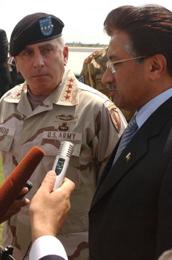
Picture source: www.centcom.mil
Pakistan, US to improve military cooperation
Online: August 29, 2006
RAWALPINDI: Pakistan and the US decided on Monday to take defence and military cooperation to another level.
The decision was made at a meeting between General John P Abizaid, commander of the US Central Command, and Vice Chief of Army Staff General Ahsan Saleem Hayat. Sources said that both sides had agreed to bolster defence relations. Gen Abizaid held out his assurance that the US would train the Pakistani military. He acknowledged Pakistan’s role in the war on terror. Gen Abizaid will meet President General Pervez Musharraf today (Tuesday). online
India and Pakistan palying their Great Game in Baluchistan
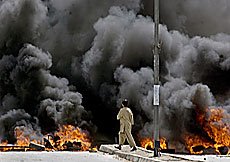
India, Pakistan playing their ‘Great Game’
Josy Joseph
Daily News and Analysis; August 28, 2006
A DNA Analysis
NEW DELHI: For long, Pakistan has accused India of fuelling rebellion in Baluchistan. India has vehemently denied any involvement, though it has in recent past and on Monday made statements against Pakistan’s suppression of the rebels.
Pakistan accuses India of using its missions in Afghanistan to train Baluch rebels and arming them. India has reasons to fuel trouble in Pakistan’s biggest province: in the short-run it would keep Pakistan engaged and troubled, and would stymie its ability to focus further on Kashmir. It looks perfectly like the South Asian dog-eat-dog world of counter-intelligence and covert operations.
There has never been any credible evidence to prove Pakistan’s claims, but there is no reason to believe Indian agencies are not interested in Baluch rebels. It is a fact that India for long has been closely watching the situation in Baluchistan due to its strategic location. Not just Pakistan’s richest region in terms of natural resources, the tribal land is also where many of Pakistan’s strategic assets are located. Trouble there should be gladdening to majority in the Indian strategic community who are steeped in the Partition mindset.
A troubled Baluchistan, which it is presently, would be of serious concern to Pakistan. That is where its biggest port project is underway. The Gwadar port, being built with Chinese assistance, would not just be Pakistan’s biggest seaport but also its most important location for naval assets in future. Gwadar is on the southwestern coast of Pakistan, next door to the Strait of Hormuz, a major sea-lane for oil and other cargo. Chagai Hills, where Pakistan conducted the 1998 nuclear tests, is in north-western Baluchistan.
The killing of Nawab Akbar Khan Bugti could have serious long-term repercussions not just in Baluchistan but across South Asia. In Baluch a new martyr is born. Across South Asia, the tremors of a possible redrawing of national boundaries can be felt again. The possibility of Baluchistan disintegrating are distant, but it cannot be ruled out. Given its strategic location and interest of various groups including the Americans in Baluchistan only adds to the possibility of the rebellion remaining robust into the future.
Also see, Bugti: The Making of a Martyr by Imtiaz Alam in The News
Reuters' Key Facts on Baluchistan
"Kashmir on the Thames": British - Pakistanis in Focus
Kashmir on the Thames: London Broil
by Peter Bergen & Paul Cruickshank
August 25, 2006: The New Republic
London, England
In New Year's Eve in 1999, Islamist militants had plenty to celebrate. At the Taliban-controlled Kandahar airport, a planeload of hostages was being swapped for terrorists held in India. The hijackers--Kashmiri militants--had managed to secure the freedom of three key allies. Two, Maulana Masood Azhar and Mushtaq Ahmed Zargar, were Pakistani; but the third, a man named Omar Sheikh, was the scion of a wealthy British Pakistani family and had studied at the London School of Economics.
That a British citizen figured so prominently in the Kandahar hostage crisis was disturbing but far from anomalous. The eleven people charged this week with conspiring to blow up planes using liquid explosives are all British citizens. So were the terrorists who attacked London in 2005, almost all of the plotters who allegedly conspired to detonate a fertilizer bomb in England in 2004, the suicide bombers who attacked a beachfront Tel Aviv bar in 2003, and an alleged Al Qaeda operative who, along with would-be shoe bomber Richard Reid, planned to explode a plane in the fall of 2001.
Besides holding British citizenship, most had one other thing in common with Omar Sheikh: They were of Pakistani descent. For terrorist organizations like Al Qaeda--which, in the years since American troops deposed the Taliban, has reconstituted itself in Pakistan--ethnic Pakistanis living in the United Kingdom make perfect recruits, since they speak English and can travel on British passports. Indeed, in the wake of this month's high-profile arrests, it can now be argued that the biggest threat to U.S. security emanates not from Iran or Iraq or Afghanistan--but rather from Great Britain, our closest ally.
necdotal evidence for the influence of Muslim extremism on British Pakistani communities is not hard to come by. We visited the Al Badr Health & Fitness Centre in East London on a balmy June night to hear Abu Muwaheed--a leader of the Saviour Sect, an Islamist group--discuss who was to blame for the 2005 London bombings. His answer? Just about everyone but the bombers themselves--the British government, the British public, even moderate Muslims who betrayed their co-religionists by cooperating with the government. The evening included a video montage of fighting in Iraq that ended with footage of Osama bin Laden calling for jihad. One Pakistani man attending the session told us he considered the lead suicide bomber in the London attacks to be "a glorious martyr." Two months later, five of the Fitness Centre's regulars would be among those arrested in connection with the plot to bomb transatlantic flights.
How did Al Qaeda's militant worldview become so popular among a subset of British Pakistanis? For one thing, there is the generational divide in the community. Just as in Turgenev's Fathers and Sons--which depicts the rift between an older generation of nineteenth-century Russian liberals and their more militant, socialist sons--some of Great Britain's young Pakistanis are filled with contempt both for the moderation of their parents and for a British society that won't quite accept them. For many, this leaves a vacuum in their identities that radical Islamist preachers have been all too glad to fill. Now, young disciples of those preachers--Abu Muwaheed, for instance--have come into their own, and they are often even more radical than their mentors. Add to this the fact that one-quarter of young British Pakistanis are unemployed, and you have a population that is especially vulnerable to the temptations of radicalism.
Still, homegrown militancy can only partly account for the problem. That's because it is primarily in Pakistan--not the United Kingdom--where British citizens are being recruited into Al Qaeda and other terrorist groups. About 400,000 British Pakistanis per year travel back to their homeland, where a small percentage embark on learning the skills necessary to become effective terrorists. Several of the British citizens recently suspected of plotting to blow up airliners reportedly went to Pakistan to meet Al Qaeda operatives. According to a government report released this year, British officials believe that the lead perpetrators of the 2005 attacks in London--Mohammed Siddique Khan and Shehzad Tanweer--met with Al Qaeda members in Pakistan. Several individuals allegedly involved in a 2004 plot to explode a fertilizer bomb in Great Britain also spent significant time in Pakistan. In April 2003, Omar Khan Sharif, whose family immigrated to Great Britain from Kashmir, attempted to carry out a suicide attack in a bar in Tel Aviv after visiting Pakistan. In 2001, according to British prosecutors, he e-mailed his wife from there, writing, "We will definitely, inshallah, meet soon, if not in this life then the next." And, in the fall of 2001, Sajit Badat plotted to explode a transatlantic airliner with a shoe bomb shortly after spending time in a Pakistani training camp.
But how to explain the lure of militancy for those who travel to Pakistan to become terrorists? The answer, in many cases, is Kashmir. A disproportionate number of Pakistanis living in Great Britain trace their lineage back to Kashmir. Though conventional wisdom holds that anger toward U.S. foreign policy is most responsible for creating new terrorists, among British Pakistanis, Kashmir is probably just as important. What's more, for the small number of British Pakistanis who want terrorist training, the facilities of Kashmiri militant groups have become an obvious first choice--as well as a gateway to Al Qaeda itself.
Al Qaeda's ties with Kashmiri militant groups date to the Afghan war against the Soviets, when bin Laden's forces fought alongside Pakistani groups like Lashkar-e-Toiba (LeT). After the Soviet withdrawal from Afghanistan, many of those groups turned their attention to Kashmir--the key reason why the Kashmiri conflict re-erupted in the 1990s. These ties endured throughout the decade and grew closer after Al Qaeda left Sudan and settled in Afghanistan in 1996. President Clinton's August 1998 cruise-missile strike against an Al Qaeda base in eastern Afghanistan killed a number of members of Harakat Ul Mujihadeen, one of the largest Kashmiri militant groups--suggesting that it was sharing training facilities with Al Qaeda.
Since September 11, the relationship between Al Qaeda and Kashmiri groups has only deepened, as demonstrated by the fact that Al Qaeda operative Abu Zubaydah was arrested in an LeT safehouse in Pakistan in 2002. Al Qaeda has been able to regroup in Pakistan after losing its base in Afghanistan in part by cooperating with Kashmiri militants. A senior American military intelligence official told us that there is "no difference" between Al Qaeda and Kashmiri terrorist organizations. Al Qaeda has also attempted to fit the Kashmir dispute into its anti-American narrative: Hamid Mir, a Pakistani journalist who is writing bin Laden's authorized biography, told us that Al Qaeda propaganda accuses Pakistan's government of selling out Kashmir under pressure from George Bush and Tony Blair.
The danger to the United States of the nexus between British Pakistanis, Al Qaeda, and Kashmir is becoming clear. One of the alleged ringleaders of the recently exposed plot to blow up transatlantic flights is Rashid Rauf, a Pakistan-born British citizen whose family immigrated to Great Britain from Kashmir. According to the Associated Press, Rauf is married to a sister-in-law of Maulana Masood Azhar, the leader of the Kashmiri terrorist group Jaish-e-Mohammed (and one of the men released as part of the deal that ended the Kandahar hostage standoff in 1999). Previously, in 2004, British authorities had charged eight men--many of Pakistani descent--with planning terrorism, including a plot to blow up the New York Stock Exchange. The cell's alleged leader, Abu Issa Al Hindi, a British convert to Islam, wrote a book explaining how he was radicalized by his experience fighting in Kashmir. In March 2006, British citizen Mohammed Ajmal Khan was sentenced to nine years for fund-raising on behalf of terrorism in Pakistan and Afghanistan. Khan admitted attending a terrorist training camp run by LeT. The judge in Khan's case described him as "a terrorist quartermaster" for LeT. According to The Daily Telegraph, he was a frequent visitor to the United States and talked about attacking U.S. synagogues. American prosecutors say Khan was in touch with a group of Virginia militants also tied to LeT.
ll of this should raise two concerns for American officials. The first is that American Pakistanis could pose a similar threat. "Homegrown terrorists may prove to be as dangerous as groups like Al Qaeda, if not more so," FBI Director Robert Mueller warned in June. There are reasons to worry that he is right. Two and a half months ago, an FBI affidavit contends, Syed Haris Ahmed, an American citizen of Pakistani descent, traveled from Atlanta to Ontario to meet with a terrorist cell. The FBI alleges that Ahmed, now in U.S. custody, planned to attend a terrorist training camp in Pakistan. In 2003, Iyman Faris, an American citizen born in Kashmir, pleaded guilty to helping Al Qaeda plan attacks in the United States. Faris admitted to meeting Khalid Sheikh Mohammed--the mastermind of the September 11 attacks--in Pakistan to plan those operations in 2002.
Yet it seems unlikely that radicalism in the American Pakistani community could pose as large a threat as radicalism in the British Pakistani community. American Muslims are, on average, more politically moderate than their British counterparts. According to a 2001 survey, 70 percent of American Muslims strongly agreed that they should participate in U.S. institutions. By contrast, a recent Pew poll found that 81 percent of British Muslims considered themselves Muslims first and British citizens second.
Of more concern, then, is the likelihood that British Pakistanis will continue to target Americans--both in the United States and abroad. To address this problem, the Bush administration should encourage the British government to monitor more closely the activities of U.K.-based extremist groups. Simply banning these organizations is not enough. Weeks after we attended one of their meetings, the Saviour Sect was outlawed by British Home Secretary John Reid. But, when we spoke to one of the organization's leaders, Anjem Choudhary, by phone, he told us, "Of course we don't use that name anymore. We just hold our meetings under another name." In addition, Great Britain must step up efforts to identify its own citizens who attend Kashmiri or Al Qaeda training camps in Pakistan.
Unfortunately, there are limits to what the British government can do alone. It will need help from moderate Muslims, some of whom are waking up to the threat posed by the radicals in their midst. "These people are ill," says Ghulam Rabbani, the imam of the mosque adjoining the Fitness Centre, where the Saviour Sect held meetings. "I say very categorically and very clearly that they are misguided and they don't know the basics of Islam."
Rabbani faces a steep challenge: According to a recent poll, a full quarter of British Muslims consider the 2005 London bombings justified. And anyone who doubts how dangerous the intersection of such sentiments, Al Qaeda, and Kashmiri militants can be should consider what became of Omar Sheikh, the former London School of Economics student who won his freedom on New Year's Eve in 1999: Two years later, he was under arrest for orchestrating the murder of Wall Street Journal reporter Daniel Pearl.
Peter Bergen is a senior fellow at the New American Foundation and the author of The Osama bin Laden I Know. Paul Cruickshank is a fellow at New York University Law School's Center on Law and Security.
by Peter Bergen & Paul Cruickshank
August 25, 2006: The New Republic
London, England
In New Year's Eve in 1999, Islamist militants had plenty to celebrate. At the Taliban-controlled Kandahar airport, a planeload of hostages was being swapped for terrorists held in India. The hijackers--Kashmiri militants--had managed to secure the freedom of three key allies. Two, Maulana Masood Azhar and Mushtaq Ahmed Zargar, were Pakistani; but the third, a man named Omar Sheikh, was the scion of a wealthy British Pakistani family and had studied at the London School of Economics.
That a British citizen figured so prominently in the Kandahar hostage crisis was disturbing but far from anomalous. The eleven people charged this week with conspiring to blow up planes using liquid explosives are all British citizens. So were the terrorists who attacked London in 2005, almost all of the plotters who allegedly conspired to detonate a fertilizer bomb in England in 2004, the suicide bombers who attacked a beachfront Tel Aviv bar in 2003, and an alleged Al Qaeda operative who, along with would-be shoe bomber Richard Reid, planned to explode a plane in the fall of 2001.
Besides holding British citizenship, most had one other thing in common with Omar Sheikh: They were of Pakistani descent. For terrorist organizations like Al Qaeda--which, in the years since American troops deposed the Taliban, has reconstituted itself in Pakistan--ethnic Pakistanis living in the United Kingdom make perfect recruits, since they speak English and can travel on British passports. Indeed, in the wake of this month's high-profile arrests, it can now be argued that the biggest threat to U.S. security emanates not from Iran or Iraq or Afghanistan--but rather from Great Britain, our closest ally.
necdotal evidence for the influence of Muslim extremism on British Pakistani communities is not hard to come by. We visited the Al Badr Health & Fitness Centre in East London on a balmy June night to hear Abu Muwaheed--a leader of the Saviour Sect, an Islamist group--discuss who was to blame for the 2005 London bombings. His answer? Just about everyone but the bombers themselves--the British government, the British public, even moderate Muslims who betrayed their co-religionists by cooperating with the government. The evening included a video montage of fighting in Iraq that ended with footage of Osama bin Laden calling for jihad. One Pakistani man attending the session told us he considered the lead suicide bomber in the London attacks to be "a glorious martyr." Two months later, five of the Fitness Centre's regulars would be among those arrested in connection with the plot to bomb transatlantic flights.
How did Al Qaeda's militant worldview become so popular among a subset of British Pakistanis? For one thing, there is the generational divide in the community. Just as in Turgenev's Fathers and Sons--which depicts the rift between an older generation of nineteenth-century Russian liberals and their more militant, socialist sons--some of Great Britain's young Pakistanis are filled with contempt both for the moderation of their parents and for a British society that won't quite accept them. For many, this leaves a vacuum in their identities that radical Islamist preachers have been all too glad to fill. Now, young disciples of those preachers--Abu Muwaheed, for instance--have come into their own, and they are often even more radical than their mentors. Add to this the fact that one-quarter of young British Pakistanis are unemployed, and you have a population that is especially vulnerable to the temptations of radicalism.
Still, homegrown militancy can only partly account for the problem. That's because it is primarily in Pakistan--not the United Kingdom--where British citizens are being recruited into Al Qaeda and other terrorist groups. About 400,000 British Pakistanis per year travel back to their homeland, where a small percentage embark on learning the skills necessary to become effective terrorists. Several of the British citizens recently suspected of plotting to blow up airliners reportedly went to Pakistan to meet Al Qaeda operatives. According to a government report released this year, British officials believe that the lead perpetrators of the 2005 attacks in London--Mohammed Siddique Khan and Shehzad Tanweer--met with Al Qaeda members in Pakistan. Several individuals allegedly involved in a 2004 plot to explode a fertilizer bomb in Great Britain also spent significant time in Pakistan. In April 2003, Omar Khan Sharif, whose family immigrated to Great Britain from Kashmir, attempted to carry out a suicide attack in a bar in Tel Aviv after visiting Pakistan. In 2001, according to British prosecutors, he e-mailed his wife from there, writing, "We will definitely, inshallah, meet soon, if not in this life then the next." And, in the fall of 2001, Sajit Badat plotted to explode a transatlantic airliner with a shoe bomb shortly after spending time in a Pakistani training camp.
But how to explain the lure of militancy for those who travel to Pakistan to become terrorists? The answer, in many cases, is Kashmir. A disproportionate number of Pakistanis living in Great Britain trace their lineage back to Kashmir. Though conventional wisdom holds that anger toward U.S. foreign policy is most responsible for creating new terrorists, among British Pakistanis, Kashmir is probably just as important. What's more, for the small number of British Pakistanis who want terrorist training, the facilities of Kashmiri militant groups have become an obvious first choice--as well as a gateway to Al Qaeda itself.
Al Qaeda's ties with Kashmiri militant groups date to the Afghan war against the Soviets, when bin Laden's forces fought alongside Pakistani groups like Lashkar-e-Toiba (LeT). After the Soviet withdrawal from Afghanistan, many of those groups turned their attention to Kashmir--the key reason why the Kashmiri conflict re-erupted in the 1990s. These ties endured throughout the decade and grew closer after Al Qaeda left Sudan and settled in Afghanistan in 1996. President Clinton's August 1998 cruise-missile strike against an Al Qaeda base in eastern Afghanistan killed a number of members of Harakat Ul Mujihadeen, one of the largest Kashmiri militant groups--suggesting that it was sharing training facilities with Al Qaeda.
Since September 11, the relationship between Al Qaeda and Kashmiri groups has only deepened, as demonstrated by the fact that Al Qaeda operative Abu Zubaydah was arrested in an LeT safehouse in Pakistan in 2002. Al Qaeda has been able to regroup in Pakistan after losing its base in Afghanistan in part by cooperating with Kashmiri militants. A senior American military intelligence official told us that there is "no difference" between Al Qaeda and Kashmiri terrorist organizations. Al Qaeda has also attempted to fit the Kashmir dispute into its anti-American narrative: Hamid Mir, a Pakistani journalist who is writing bin Laden's authorized biography, told us that Al Qaeda propaganda accuses Pakistan's government of selling out Kashmir under pressure from George Bush and Tony Blair.
The danger to the United States of the nexus between British Pakistanis, Al Qaeda, and Kashmir is becoming clear. One of the alleged ringleaders of the recently exposed plot to blow up transatlantic flights is Rashid Rauf, a Pakistan-born British citizen whose family immigrated to Great Britain from Kashmir. According to the Associated Press, Rauf is married to a sister-in-law of Maulana Masood Azhar, the leader of the Kashmiri terrorist group Jaish-e-Mohammed (and one of the men released as part of the deal that ended the Kandahar hostage standoff in 1999). Previously, in 2004, British authorities had charged eight men--many of Pakistani descent--with planning terrorism, including a plot to blow up the New York Stock Exchange. The cell's alleged leader, Abu Issa Al Hindi, a British convert to Islam, wrote a book explaining how he was radicalized by his experience fighting in Kashmir. In March 2006, British citizen Mohammed Ajmal Khan was sentenced to nine years for fund-raising on behalf of terrorism in Pakistan and Afghanistan. Khan admitted attending a terrorist training camp run by LeT. The judge in Khan's case described him as "a terrorist quartermaster" for LeT. According to The Daily Telegraph, he was a frequent visitor to the United States and talked about attacking U.S. synagogues. American prosecutors say Khan was in touch with a group of Virginia militants also tied to LeT.
ll of this should raise two concerns for American officials. The first is that American Pakistanis could pose a similar threat. "Homegrown terrorists may prove to be as dangerous as groups like Al Qaeda, if not more so," FBI Director Robert Mueller warned in June. There are reasons to worry that he is right. Two and a half months ago, an FBI affidavit contends, Syed Haris Ahmed, an American citizen of Pakistani descent, traveled from Atlanta to Ontario to meet with a terrorist cell. The FBI alleges that Ahmed, now in U.S. custody, planned to attend a terrorist training camp in Pakistan. In 2003, Iyman Faris, an American citizen born in Kashmir, pleaded guilty to helping Al Qaeda plan attacks in the United States. Faris admitted to meeting Khalid Sheikh Mohammed--the mastermind of the September 11 attacks--in Pakistan to plan those operations in 2002.
Yet it seems unlikely that radicalism in the American Pakistani community could pose as large a threat as radicalism in the British Pakistani community. American Muslims are, on average, more politically moderate than their British counterparts. According to a 2001 survey, 70 percent of American Muslims strongly agreed that they should participate in U.S. institutions. By contrast, a recent Pew poll found that 81 percent of British Muslims considered themselves Muslims first and British citizens second.
Of more concern, then, is the likelihood that British Pakistanis will continue to target Americans--both in the United States and abroad. To address this problem, the Bush administration should encourage the British government to monitor more closely the activities of U.K.-based extremist groups. Simply banning these organizations is not enough. Weeks after we attended one of their meetings, the Saviour Sect was outlawed by British Home Secretary John Reid. But, when we spoke to one of the organization's leaders, Anjem Choudhary, by phone, he told us, "Of course we don't use that name anymore. We just hold our meetings under another name." In addition, Great Britain must step up efforts to identify its own citizens who attend Kashmiri or Al Qaeda training camps in Pakistan.
Unfortunately, there are limits to what the British government can do alone. It will need help from moderate Muslims, some of whom are waking up to the threat posed by the radicals in their midst. "These people are ill," says Ghulam Rabbani, the imam of the mosque adjoining the Fitness Centre, where the Saviour Sect held meetings. "I say very categorically and very clearly that they are misguided and they don't know the basics of Islam."
Rabbani faces a steep challenge: According to a recent poll, a full quarter of British Muslims consider the 2005 London bombings justified. And anyone who doubts how dangerous the intersection of such sentiments, Al Qaeda, and Kashmiri militants can be should consider what became of Omar Sheikh, the former London School of Economics student who won his freedom on New Year's Eve in 1999: Two years later, he was under arrest for orchestrating the murder of Wall Street Journal reporter Daniel Pearl.
Peter Bergen is a senior fellow at the New American Foundation and the author of The Osama bin Laden I Know. Paul Cruickshank is a fellow at New York University Law School's Center on Law and Security.
Sunday, August 27, 2006
"Bugti’s killing is the biggest blunder since Bhutto’s execution"
Extracts from Daily Times Editorial: August 29, 2006
Whoever in the national security establishment decided to eliminate Nawab Bugti physically is clueless about the force of politics, history and nationalism. Clearly, this was a politically inopportune moment for it. Most of what the opposition will say about the killing of Mr Bugti is going to gibe with what leading PMLQ politicians have felt: that the deadlock in Balochistan should not be resolved through military action. The ruling party is already bedevilled with rifts that President Pervez Musharraf is hard put to control. With the barrage of violent statements that are bound to come from the opposition these rifts are going to be more difficult to paper over. Nawab Bugti, already 80 plus, wanted a heroic death for many personal, provincial and extra-provincial reasons. Whoever took military action against him has granted him his wish to be a martyr. This is a political nightmare that the PMLQ will find hard to handle here and now and Pakistan in the hereafter.
Whatever his personality and past, Nawab Bugti’s death is bound to become part of the heroic lore of Baloch history of resistance against the state since 1947 and strengthen the separatist emotion in the province. Since much of the Baloch struggle had combined with the all-Pakistan campaign against such phenomena as military rule and the cruel centralism of One Unit, it will find resonance with most Pakistanis — especially in the smaller provinces. His death will put an end to the case building by the government before going for the kill on Saturday. The case built by the state against the rebellious ‘sardars’ was not incredible: their insurgents were blowing up public assets and carrying out attacks against state personnel, they had organised ‘farari’ camps where Baloch warriors were trained and, finally, they were recipients of large sums of money, possibly sent in by India through Afghanistan. But now all this will sound like so much unconvincing history.
Baloch nationalism is based on a number of factors recognised by the textbooks but the most significant component is tribal resistance and honour. The sardari system provided leadership to this nationalism by upholding Baloch honour. While the Baloch politician developed flexible political skills, the Baloch sardar outshone him in the eyes of the Baloch people because of his inflexibility and an implacable assertion of Baloch rights. Of course, the Bugti-Marri-Mengal triumvirate of Baloch nationalism that developed over the years had its internal tensions and there was a tacit struggle for supremacy among the three. Needless to say, only the most radical could have won. It is in this framework that Nawab Bugti’s final choice of death has to be seen. And it is here that Islamabad has erred most grievously and might have to pay a high price for it. It has let Nawab Bugti win the final battle. He will now be the all-Balochistan symbol of resistance to Islamabad. If there is external interference in Balochistan it will only be strengthened.
Whoever in the national security establishment decided to eliminate Nawab Bugti physically is clueless about the force of politics, history and nationalism. Clearly, this was a politically inopportune moment for it. Most of what the opposition will say about the killing of Mr Bugti is going to gibe with what leading PMLQ politicians have felt: that the deadlock in Balochistan should not be resolved through military action. The ruling party is already bedevilled with rifts that President Pervez Musharraf is hard put to control. With the barrage of violent statements that are bound to come from the opposition these rifts are going to be more difficult to paper over. Nawab Bugti, already 80 plus, wanted a heroic death for many personal, provincial and extra-provincial reasons. Whoever took military action against him has granted him his wish to be a martyr. This is a political nightmare that the PMLQ will find hard to handle here and now and Pakistan in the hereafter.
Whatever his personality and past, Nawab Bugti’s death is bound to become part of the heroic lore of Baloch history of resistance against the state since 1947 and strengthen the separatist emotion in the province. Since much of the Baloch struggle had combined with the all-Pakistan campaign against such phenomena as military rule and the cruel centralism of One Unit, it will find resonance with most Pakistanis — especially in the smaller provinces. His death will put an end to the case building by the government before going for the kill on Saturday. The case built by the state against the rebellious ‘sardars’ was not incredible: their insurgents were blowing up public assets and carrying out attacks against state personnel, they had organised ‘farari’ camps where Baloch warriors were trained and, finally, they were recipients of large sums of money, possibly sent in by India through Afghanistan. But now all this will sound like so much unconvincing history.
Baloch nationalism is based on a number of factors recognised by the textbooks but the most significant component is tribal resistance and honour. The sardari system provided leadership to this nationalism by upholding Baloch honour. While the Baloch politician developed flexible political skills, the Baloch sardar outshone him in the eyes of the Baloch people because of his inflexibility and an implacable assertion of Baloch rights. Of course, the Bugti-Marri-Mengal triumvirate of Baloch nationalism that developed over the years had its internal tensions and there was a tacit struggle for supremacy among the three. Needless to say, only the most radical could have won. It is in this framework that Nawab Bugti’s final choice of death has to be seen. And it is here that Islamabad has erred most grievously and might have to pay a high price for it. It has let Nawab Bugti win the final battle. He will now be the all-Balochistan symbol of resistance to Islamabad. If there is external interference in Balochistan it will only be strengthened.
US General Abizaid says Pakistan Not Aiding Taliban
Abizaid says Pakistan not aiding Taliban
Online News, Islamabad
KABUL: A coalition air strike in southern Afghanistan killed a Taliban commander and 15 other militants, the U.S. military said.
A top American general, meanwhile, said insurgents are still using neighboring Pakistan as a base for infiltration.
Insurgents killed a NATO-led coalition soldier in southern Helmand province Sunday, NATO said. It did not provide the soldier’s nationality or details of the clash. Another NATO soldier and six Afghan troops were wounded when mortars hit their base in neighboring Kandahar province Sunday, NATO said.
Two French soldiers were killed and two others were wounded in the volatile east on Friday, while at least 13 other insurgents were killed in clashes with police and NATO in the south, the U.S. military said.
On Saturday, Canadian troops in the south mistakenly killed a policeman and wounded six other people, including two civilians, according to NATO.
Afghanistan is experiencing its worst bout of violence since the late-2001 ouster of the Taliban regime for hosting al-Qaida leader Osama bin Laden. More than 1,600 people, mostly militants, have died in the past four months, according to an Associated Press tally of violent incidents reported by U.S., NATO and Afghan officials.
Four rockets slammed into west Kabul on Sunday, one landing near a police station and another damaging a house, but nobody was injured, police said.
Gen. John Abizaid, commander of the U.S. Central Command, said militants are using Pakistan as a base from which to infiltrate into Afghanistan, but he said the Pakistani government is not conspiring with them.
"I think that Pakistan has done an awful lot in going after al-Qaida and it’s important that they don’t let the Taliban groups be organized in the Pakistani side of the border," he told reporters in Bagram, where the main U.S. military base in Afghanistan is located.
Abizaid said he "absolutely does not believe" accusations of collusion between Pakistan’s government and the resurgent Taliban rebels or other extremists.
"You do not order your soldiers in the field against an enemy in order to play some sort of a game with neighboring countries," he said.
Afghanistan repeatedly has criticized Pakistan for not doing enough to prevent Taliban militants and other rebels from crossing the poorly marked border.
Pakistan, a former Taliban supporter but now a U.S. ally in its war on terrorism, says it does all it can to tackle insurgents and has deployed 80,000 troops along the frontier.
Online News, Islamabad
KABUL: A coalition air strike in southern Afghanistan killed a Taliban commander and 15 other militants, the U.S. military said.
A top American general, meanwhile, said insurgents are still using neighboring Pakistan as a base for infiltration.
Insurgents killed a NATO-led coalition soldier in southern Helmand province Sunday, NATO said. It did not provide the soldier’s nationality or details of the clash. Another NATO soldier and six Afghan troops were wounded when mortars hit their base in neighboring Kandahar province Sunday, NATO said.
Two French soldiers were killed and two others were wounded in the volatile east on Friday, while at least 13 other insurgents were killed in clashes with police and NATO in the south, the U.S. military said.
On Saturday, Canadian troops in the south mistakenly killed a policeman and wounded six other people, including two civilians, according to NATO.
Afghanistan is experiencing its worst bout of violence since the late-2001 ouster of the Taliban regime for hosting al-Qaida leader Osama bin Laden. More than 1,600 people, mostly militants, have died in the past four months, according to an Associated Press tally of violent incidents reported by U.S., NATO and Afghan officials.
Four rockets slammed into west Kabul on Sunday, one landing near a police station and another damaging a house, but nobody was injured, police said.
Gen. John Abizaid, commander of the U.S. Central Command, said militants are using Pakistan as a base from which to infiltrate into Afghanistan, but he said the Pakistani government is not conspiring with them.
"I think that Pakistan has done an awful lot in going after al-Qaida and it’s important that they don’t let the Taliban groups be organized in the Pakistani side of the border," he told reporters in Bagram, where the main U.S. military base in Afghanistan is located.
Abizaid said he "absolutely does not believe" accusations of collusion between Pakistan’s government and the resurgent Taliban rebels or other extremists.
"You do not order your soldiers in the field against an enemy in order to play some sort of a game with neighboring countries," he said.
Afghanistan repeatedly has criticized Pakistan for not doing enough to prevent Taliban militants and other rebels from crossing the poorly marked border.
Pakistan, a former Taliban supporter but now a U.S. ally in its war on terrorism, says it does all it can to tackle insurgents and has deployed 80,000 troops along the frontier.
Crisis in Baluchistan
August 28, 2006 Christian Science Monitor
A rebel's killing roils Pakistan
By David Montero
QUETTA, PAKISTAN – For years, Nawab Mohammed Akbar Khan Bugti battled the Pakistan Army. The 80-year-old renegade hidden in the mountains of Balochistan became a legend in his fight for greater autonomy against what he saw as colonial brutality.
Bugti was both hated and revered. But as a former federal minister and governor, he symbolized a political as well as a violent struggle. And his death this weekend, during a fierce three-day battle that left more than 30 dead, could prove a serious blow to Pakistan's stability.
"This is not a good sign," says Samina Ahmed, South Asia director of the International Crisis Group. "Just a few years ago [Nawab Bugti] was talking to the government. Keeping that door open was the way to go. Now that door has been slammed shut."
Bugti's death could also reverberate in the region, some analysts say. The Balochis are spread across several countries, with millions living in parts of Iran and Afghanistan that border Pakistan.
"They will provide sanctuary to Baloch militants. There will be a lot of sympathy," says Lt. Gen. (ret.) Talat Masood, a defense analyst in Islamabad.
For complete article, click here
For BBC report on Baluchistan by Zafar Abbas, click here
A timeline - Akbar Bugti's Political Profile at The News
A rebel's killing roils Pakistan
By David Montero
QUETTA, PAKISTAN – For years, Nawab Mohammed Akbar Khan Bugti battled the Pakistan Army. The 80-year-old renegade hidden in the mountains of Balochistan became a legend in his fight for greater autonomy against what he saw as colonial brutality.
Bugti was both hated and revered. But as a former federal minister and governor, he symbolized a political as well as a violent struggle. And his death this weekend, during a fierce three-day battle that left more than 30 dead, could prove a serious blow to Pakistan's stability.
"This is not a good sign," says Samina Ahmed, South Asia director of the International Crisis Group. "Just a few years ago [Nawab Bugti] was talking to the government. Keeping that door open was the way to go. Now that door has been slammed shut."
Bugti's death could also reverberate in the region, some analysts say. The Balochis are spread across several countries, with millions living in parts of Iran and Afghanistan that border Pakistan.
"They will provide sanctuary to Baloch militants. There will be a lot of sympathy," says Lt. Gen. (ret.) Talat Masood, a defense analyst in Islamabad.
For complete article, click here
For BBC report on Baluchistan by Zafar Abbas, click here
A timeline - Akbar Bugti's Political Profile at The News
Saturday, August 26, 2006
Bugti Killed in a military operation: This is pure murder and blood is on Musharraf's hands

BBC - August 26, 2006
Pakistan says key rebel is dead
Tribal leader Nawab Akbar Bugti has been killed in a battle between tribal militants and government forces in Balochistan province, Pakistan says.
The battle near his mountain hideout in south-west Pakistan also caused heavy casualties on both sides, reports say.
More than 20 soldiers and at least 30 rebels died, officials say.
The octogenarian has been at the head of a tribal campaign to win political autonomy and a greater share of revenue from Balochistan's gas reserves.
"It is confirmed, Nawab Bugti has been killed in an operation," Information Minister Mohammad Ali Durrani told Reuters news agency.
The battle reportedly took place near the town of Dera Bugti, not far from Mr Bugti's hideout.
One report said government forces had targeted between 50 and 80 rebel fighters, after being led to the area by an intercepted satellite phone call.
Mineral-rich
Balochistan is Pakistan's biggest province, and is said to be the richest in mineral resources. It is a major supplier of natural gas to the country.
For decades, Baloch nationalists have been critical of the central government in Islamabad, accusing it of depriving the province of its due.
They say the government took away income from natural gas and other resources, while spending only a trivial amount on the province.
For Newsline's interview with Akbar Bugti, click here
For Political profile of Akbar Bugti in Daily Times, click here
Pakistan's balancing act
Excerpts from
Pakistan's Awkward Balancing Act on Islamic Militant Groups
By Pamela Constable
Washington Post Foreign Service; August 26, 2006; A10
ISLAMABAD, Pakistan -- For the past five years, Pakistan has pursued a risky, two-sided policy toward Islamic militancy, positioning itself as a major ally in the Western-led war against global terrorism while reportedly allowing homegrown Muslim insurgent groups to meddle in neighboring India and Afghanistan.
"The conundrum for the military still persists," said Talat Masood, a retired Pakistani army general. "The question always is, should we totally ban these organizations or keep them for later use?" Although the government has "selectively" prosecuted extremist groups, he said, "at the conceptual level, it has deliberately followed an ambiguous policy."
The basic problem for Pakistan's president, Gen. Pervez Musharraf, is that he is trying to please two irreconcilable groups. Abroad, the leader of this impoverished Muslim country is frantically competing with arch-rival India, a predominantly Hindu country, for American political approval and economic ties. To that end, he has worked hard to prove himself as a staunch anti-terrorism ally.
But at home, where he hopes to win election in 2007 after eight years as a self-appointed military ruler, Musharraf needs to appease Pakistan's Islamic parties to counter strong opposition from its secular ones. He also needs to keep alive the Kashmiri and Taliban insurgencies on Pakistan's borders to counter fears within military ranks that India, which has developed close ties with the Kabul government, is pressuring its smaller rival on two flanks.
Until recently, Musharraf had handled this balancing act with some success, Pakistani and foreign experts said. He formally banned several radical Islamic groups while quietly allowing them to survive. He sent thousands of troops to the Afghan border while Taliban insurgents continued to slip back and forth. Meanwhile, his security forces arrested more than 700 terrorism suspects, earning Western gratitude instead of pressure to get tougher on homegrown violence.
"It is ironic that our very success in thwarting plots and arresting a large number of terrorists reinforces the perception that this country is a bastion of terrorism," said Shafqat Mahmood, a former Pakistani legislator, suggesting that Islamic militancy has been permitted to flourish in Pakistan at the country's peril. "Our triumphs in the war against terror have become advertisements of our failure," he said.
In an interview last week, Riaz Mohammed Khan, Pakistan's foreign secretary, expressed indignation that India had swiftly blamed Pakistani-based groups for the train bombings, saying Pakistan had "no evidence whatsoever" of any such links and that India had ignored its repeated offers to collaborate in any investigation of the attacks, which killed more than 180 people.
Some observers suggested that in different ways, both Pakistan and India are using the terrorist threat to bolster their competing relations with the West. Just as Pakistan, the regional underdog, may be exaggerating its role as a terror-fighter, they noted, India, the aspirant to global influence, may be exaggerating its role as a victim of terror.
Others suggest that U.S. policy in the Middle East is making it difficult for Muslim countries such as Pakistan to remain peaceful and in control of large, impoverished populations who increasingly turn to religion and identify with the struggles of Muslims in other countries.
But critics said Pakistan's problems with Islamic violence cannot be resolved as long as the military remains in power. In an unusual move last month, a diverse group of senior former civilian and military officials wrote an open letter to Musharraf, warning that the country is becoming dangerously polarized and that a uniformed presidency only exacerbates the problem by politicizing the armed forces. The only solution, the group wrote, is a transition to a "complete and authentic democracy."
Pakistan's Awkward Balancing Act on Islamic Militant Groups
By Pamela Constable
Washington Post Foreign Service; August 26, 2006; A10
ISLAMABAD, Pakistan -- For the past five years, Pakistan has pursued a risky, two-sided policy toward Islamic militancy, positioning itself as a major ally in the Western-led war against global terrorism while reportedly allowing homegrown Muslim insurgent groups to meddle in neighboring India and Afghanistan.
"The conundrum for the military still persists," said Talat Masood, a retired Pakistani army general. "The question always is, should we totally ban these organizations or keep them for later use?" Although the government has "selectively" prosecuted extremist groups, he said, "at the conceptual level, it has deliberately followed an ambiguous policy."
The basic problem for Pakistan's president, Gen. Pervez Musharraf, is that he is trying to please two irreconcilable groups. Abroad, the leader of this impoverished Muslim country is frantically competing with arch-rival India, a predominantly Hindu country, for American political approval and economic ties. To that end, he has worked hard to prove himself as a staunch anti-terrorism ally.
But at home, where he hopes to win election in 2007 after eight years as a self-appointed military ruler, Musharraf needs to appease Pakistan's Islamic parties to counter strong opposition from its secular ones. He also needs to keep alive the Kashmiri and Taliban insurgencies on Pakistan's borders to counter fears within military ranks that India, which has developed close ties with the Kabul government, is pressuring its smaller rival on two flanks.
Until recently, Musharraf had handled this balancing act with some success, Pakistani and foreign experts said. He formally banned several radical Islamic groups while quietly allowing them to survive. He sent thousands of troops to the Afghan border while Taliban insurgents continued to slip back and forth. Meanwhile, his security forces arrested more than 700 terrorism suspects, earning Western gratitude instead of pressure to get tougher on homegrown violence.
"It is ironic that our very success in thwarting plots and arresting a large number of terrorists reinforces the perception that this country is a bastion of terrorism," said Shafqat Mahmood, a former Pakistani legislator, suggesting that Islamic militancy has been permitted to flourish in Pakistan at the country's peril. "Our triumphs in the war against terror have become advertisements of our failure," he said.
In an interview last week, Riaz Mohammed Khan, Pakistan's foreign secretary, expressed indignation that India had swiftly blamed Pakistani-based groups for the train bombings, saying Pakistan had "no evidence whatsoever" of any such links and that India had ignored its repeated offers to collaborate in any investigation of the attacks, which killed more than 180 people.
Some observers suggested that in different ways, both Pakistan and India are using the terrorist threat to bolster their competing relations with the West. Just as Pakistan, the regional underdog, may be exaggerating its role as a terror-fighter, they noted, India, the aspirant to global influence, may be exaggerating its role as a victim of terror.
Others suggest that U.S. policy in the Middle East is making it difficult for Muslim countries such as Pakistan to remain peaceful and in control of large, impoverished populations who increasingly turn to religion and identify with the struggles of Muslims in other countries.
But critics said Pakistan's problems with Islamic violence cannot be resolved as long as the military remains in power. In an unusual move last month, a diverse group of senior former civilian and military officials wrote an open letter to Musharraf, warning that the country is becoming dangerously polarized and that a uniformed presidency only exacerbates the problem by politicizing the armed forces. The only solution, the group wrote, is a transition to a "complete and authentic democracy."
"Army or Armed Mob"?: A Point to Ponder
Discipline in the army, as I knew it
Kamran Shafi
The News, August 26, 2006
Or shall we call it the 'rule of law' that I saw as a young officer in this same army, in which these days if a traffic policeman issues a ticket to a young officer he risks being thrashed by a truck-full of troops which the young lout will have whistled up from his unit lines (this happened to a motorway policeman some years ago). When, indeed, witnesses who might cite an officer for a breach of the law will themselves be dealt with in a harsh manner such as the Multan shopkeeper whose shop was declared out of bounds for all ranks in military parlance just because he sided with a traffic policeman who tried to stop two young officers from riding their motor-cycle up a one-way street.
I was commissioned in May 1966 and because of the just-ended 1965 war found myself promoted to lieutenant within six months, in which lofty rank I very soon found myself the senior subaltern of my battalion, a venerated old unit, then 166 years old. The senior subaltern was a thankless and awful position to find oneself in, in normal circumstances; give it the war and new officers joining units every few months and it was absolute hell. We got two in quick succession -- to speak the truth pretty wild boys -- and by golly did they give me a tough time.
The senior subaltern was answerable to the adjutant for the younger lot's good behaviour in and outside the mess. And so it came to be that virtually every weekend, and sometimes during the week, I was to be found on my bicycle trying to run the two to ground, let us call them 'G' and 'J', whenever they were found missing at dinner in the mess, or when they didn't appear at all, or when they were reported missing from their rooms for any length of time. There was not a police post or police station in Sialkot and environs that I did not know backwards, having been there looking for the two on the off chance that they had been arrested. It was with great relief that we moved to Marala a year later.
And why do you think I went to all the trouble? Simply because, if so much as a police report; not FIR, please mark, arrived in the unit, let alone the CO who lived somewhere up there in the clouds for us lower forms of animal life, the adjutant would have had my hide. What would have happened to G and J was something we could not even imagine. Indeed, most units would have been turned upside down if the police so much as complained about one or two of their officers. It would be unthinkable in those days. For the only thing that mattered to officers was the good name of their units. It was such an imperative to stay above things like traffic tickets or FIRs or being hauled off to the police stations that it was mandatory for all ranks to have lights on their bicycles at night and if someone did not have a bicycle with a light he carried a torch gripped on the handle bar.
How things have slipped, indeed fallen, that today army officers can indulge in the sort of hooliganism such as the incidents narrated above. The point to note, however, is that not only are individual officers less disciplined and more free-wheeling than we ever were, they are actually aided and abetted by their seniors. This is the most shameful aspect of it all. Individual officers can make mistakes, might indeed behave like yahoos at times: they can always be dealt with for there is a section in the manual of Pakistan Military Law for every infringement under the sun. The situation becomes alarming when the higher command gets involved on the side of the transgressing officers.
As an example, how did the shop in Multan get placed out of bounds for all ranks without orders from the local highest commander under whose command the military police work, and whose remit it is to place establishments/areas out of bounds or otherwise? Indeed, how did the officer who had the motorway policeman thrashed manage to fill an army truck with soldiers and have them driven from the unit lines to the police lines where the beating took place? It is not easy to "commandeer" army trucks and drive them out of the mechanical transport parks because every single trip has to be authorised on paper.
Quite obviously, this sort of behaviour springs directly from the fact that the army considers itself above the law for the reason that it recognises its pre-eminence in the country. And with good reason too, for who can blame a young captain for thinking he is superior to a police official when he sees prime ministers and great big ministers bowing and kowtowing to his superiors? Indeed, so many times has the army taken over the country that young officers might be forgiven if they think that it, and therefore they, rule the roost.
This is not a good place for the army to be, for it is bad for the single most important attribute that differentiates an army from an armed mob: discipline. It is time the general headquarters sat up and took notice of infringements that not only give the army a very bad name, they have a deeply demoralising and damaging effect on everybody.
Kamran Shafi
The News, August 26, 2006
Or shall we call it the 'rule of law' that I saw as a young officer in this same army, in which these days if a traffic policeman issues a ticket to a young officer he risks being thrashed by a truck-full of troops which the young lout will have whistled up from his unit lines (this happened to a motorway policeman some years ago). When, indeed, witnesses who might cite an officer for a breach of the law will themselves be dealt with in a harsh manner such as the Multan shopkeeper whose shop was declared out of bounds for all ranks in military parlance just because he sided with a traffic policeman who tried to stop two young officers from riding their motor-cycle up a one-way street.
I was commissioned in May 1966 and because of the just-ended 1965 war found myself promoted to lieutenant within six months, in which lofty rank I very soon found myself the senior subaltern of my battalion, a venerated old unit, then 166 years old. The senior subaltern was a thankless and awful position to find oneself in, in normal circumstances; give it the war and new officers joining units every few months and it was absolute hell. We got two in quick succession -- to speak the truth pretty wild boys -- and by golly did they give me a tough time.
The senior subaltern was answerable to the adjutant for the younger lot's good behaviour in and outside the mess. And so it came to be that virtually every weekend, and sometimes during the week, I was to be found on my bicycle trying to run the two to ground, let us call them 'G' and 'J', whenever they were found missing at dinner in the mess, or when they didn't appear at all, or when they were reported missing from their rooms for any length of time. There was not a police post or police station in Sialkot and environs that I did not know backwards, having been there looking for the two on the off chance that they had been arrested. It was with great relief that we moved to Marala a year later.
And why do you think I went to all the trouble? Simply because, if so much as a police report; not FIR, please mark, arrived in the unit, let alone the CO who lived somewhere up there in the clouds for us lower forms of animal life, the adjutant would have had my hide. What would have happened to G and J was something we could not even imagine. Indeed, most units would have been turned upside down if the police so much as complained about one or two of their officers. It would be unthinkable in those days. For the only thing that mattered to officers was the good name of their units. It was such an imperative to stay above things like traffic tickets or FIRs or being hauled off to the police stations that it was mandatory for all ranks to have lights on their bicycles at night and if someone did not have a bicycle with a light he carried a torch gripped on the handle bar.
How things have slipped, indeed fallen, that today army officers can indulge in the sort of hooliganism such as the incidents narrated above. The point to note, however, is that not only are individual officers less disciplined and more free-wheeling than we ever were, they are actually aided and abetted by their seniors. This is the most shameful aspect of it all. Individual officers can make mistakes, might indeed behave like yahoos at times: they can always be dealt with for there is a section in the manual of Pakistan Military Law for every infringement under the sun. The situation becomes alarming when the higher command gets involved on the side of the transgressing officers.
As an example, how did the shop in Multan get placed out of bounds for all ranks without orders from the local highest commander under whose command the military police work, and whose remit it is to place establishments/areas out of bounds or otherwise? Indeed, how did the officer who had the motorway policeman thrashed manage to fill an army truck with soldiers and have them driven from the unit lines to the police lines where the beating took place? It is not easy to "commandeer" army trucks and drive them out of the mechanical transport parks because every single trip has to be authorised on paper.
Quite obviously, this sort of behaviour springs directly from the fact that the army considers itself above the law for the reason that it recognises its pre-eminence in the country. And with good reason too, for who can blame a young captain for thinking he is superior to a police official when he sees prime ministers and great big ministers bowing and kowtowing to his superiors? Indeed, so many times has the army taken over the country that young officers might be forgiven if they think that it, and therefore they, rule the roost.
This is not a good place for the army to be, for it is bad for the single most important attribute that differentiates an army from an armed mob: discipline. It is time the general headquarters sat up and took notice of infringements that not only give the army a very bad name, they have a deeply demoralising and damaging effect on everybody.
An intriguing idea: Redrawing the Muslim World Map!
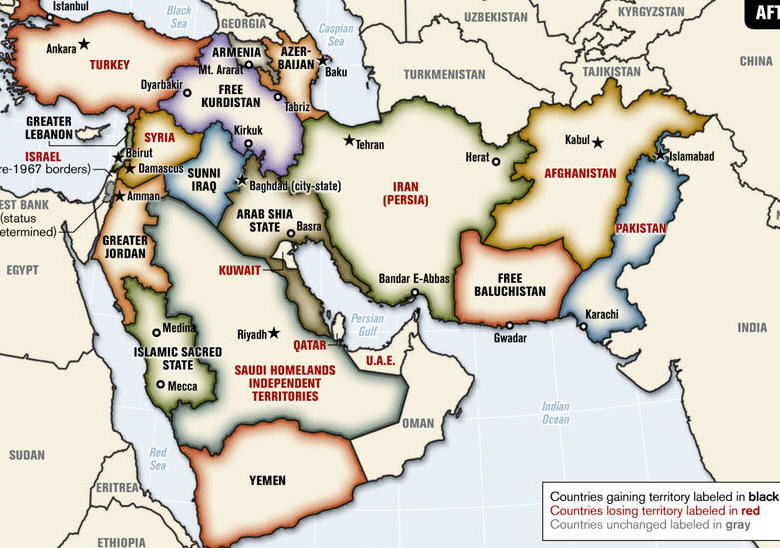
Redrawn map for Muslim world
By Khalid Hasan
Daily Times, august 26, 2006
WASHINGTON: Muslim circles have expressed alarm and disgust at the publication of a redrawn Muslim world in a journal closely linked to the US armed forces.
The Armed Forces Journal, which has published the redrawn map of the world of Islam, along with a long explanatory article, is published by the Army Times Publishing Company, a part of Gannett Company, Inc, the world’s largest publisher of professional military and defence periodicals.
The proposed scheme places Pakistan on the chopping block. According to the plan, “Iran, a state with madcap boundaries, would lose a great deal of territory to Unified Azerbaijan, Free Kurdistan, the Arab Shia State and Free Balochistan, but would gain the provinces around Herat in today’s Afghanistan — a region with a historical and linguistic affinity for Persia. Iran would, in effect, become an ethnic Persian state again, with the most difficult question being whether or not it should keep the port of Bandar Abbas or surrender it to the Arab Shia State.
What Afghanistan would lose to Persia in the west, it would gain in the east, as Pakistan’s Northwest Frontier tribes would be reunited with their Afghan brethren Pakistan, another unnatural state, would also lose its Baloch territory to Free Balochistan. The remaining ‘natural’ Pakistan would lie entirely east of the Indus, except for a westward spur near Karachi.
The city-states of the UAE would have a mixed fate — as they probably will in reality. Some might be incorporated in the Arab Shia State ringing much of the Persian Gulf … Since all puritanical cultures are hypocritical, Dubai, of necessity, would be allowed to retain its playground status for rich debauchees. Kuwait would remain within its current borders, as would Oman.””
The redrawn map claims to “redress the wrongs suffered by the most significant ‘cheated’ population groups, such as the Kurds, Baloch and Arab Shia, but still fail to account adequately for Middle Eastern Christians, Bahais, Ismailis, Naqshbandis and many another numerically lesser minorities.” It adds that “one haunting wrong can never be redressed with a reward of territory: the genocide perpetrated against the Armenians by the dying Ottoman Empire.”
The author, Ralph Peters, argues that even those who abhor the topic of altering borders would be well-served to engage in an exercise that attempts to conceive a fairer, if still imperfect, amendment of national boundaries “between the Bosporus and the Indus.” According to him, “We are dealing with colossal, man-made deformities that will not stop generating hatred and violence until they are corrected. As for those who refuse to ‘think the unthinkable’, declaring that boundaries must not change and that’s that, it pays to remember that boundaries have never stopped changing through the centuries. Borders have never been static, and many frontiers, from Congo through Kosovo to the Caucasus, are changing even now.” He adds that “ethnic cleansing works”.
Peter argues that for Irael to have any hope of living in “reasonable peace” with its neighbours, it will have to return to its pre-1967 borders, with essential local adjustments for legitimate security concerns. He writes that the most “glaring injustice” between the Balkan Mountains and the Himalayas is the absence of an independent Kurdish state. There are between 27 million and 36 million Kurds living in contiguous regions in the Middle East. He calls Iraq an unnatural state and calls for a greater Kurdish state, which will include Turkish, Syrian and Iranian Kurds. A Free Kurdistan, stretching from Diyarbakir through Tabriz, would be the most pro-Western state between Bulgaria and Japan, he adds.
Iraq’s three Sunni-majority provinces might eventually choose to unify with a Syria that loses its littoral to a Mediterranean-oriented Greater Lebanon. The Shia south of old Iraq would form the basis of an Arab Shia State rimming much of the Persian Gulf. Jordan would retain its current territory, with some southward expansion at Saudi expense. For its part, the unnatural state of Saudi Arabia would suffer as great a dismantling as Pakistan.
The author is of the opinion that a root cause of the broad stagnation in the Muslim world is the Saudi royal family’s treatment of Mecca and Medina as their “fiefdom.” With Islam’s holiest shrines under the control of the Saudis, they have been able to project their Wahhabi vision of a “disciplinarian, intolerant faith far beyond their borders.” The rise of the Saudis to wealth and, consequently, influence has been “the worst thing” to happen to the Muslim world as a whole since the advent of Islam, and the worst thing to happen to Arabs since the Ottoman — if not the Mongol — conquest. .
Peter writes, “While non-Muslims could not effect a change in the control of Islam’s holy cities, imagine how much healthier the Muslim world might become were Mecca and Medina ruled by a rotating council representative of the world’s major Muslim schools and movements in an Islamic Sacred State — a sort of Muslim super-Vatican — where the future of a great faith might be debated rather than merely decreed.
For the Source article, Blood borders: How a better Middle East would look By Ralph Peters in the Armed Forces Journal click here
Thursday, August 24, 2006
Does the India-Pakistan peace talks have a future?
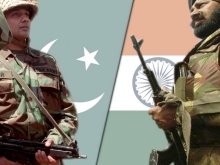
Does the India-Pakistan peace talks have a future?
From www.moneycontrol.com; August 24, 2006
Has the Mumbai bomb blasts torn apart whatever progress was made with the peace process with Pakistan? Or has it just been derailed for a bit and will soon be back on track? At the best of times, the relationship India and Pakistan share is patchy and stormy in parts. So, when terrorist attacks start getting exported to far corners of India, and all fingers of suspicion point at Pakistan, it seems like the peace process may have been damaged yet again. But Pakistan keeps claiming that the terrorism is something that India keeps playing up to a resolving the Kashmir issue. Even the US sides with them and says that there is no proof that Pakistan is involved in the blasts.
But India does have a legitimate grievance whether Pakistan or the United States choses to acknowledge that. Predictably, Pakistani MP, Minu Bhandara says that these accusations are unfounded and that Pakistan is always the first to be picked on everytime something like this happens, even if there is no concrete evidence to prove it.
But even Former Indian High Commissioner in Islamabad, G Parthasarthy feels that "we acted prematurely by blaming Pakistan for the Mumbai bomb blasts. We had no evidence at that stage and we have no evidence now. But the earlier bomb blasts - the one in Ayodhya and especially the one in Varanasi - there was clear evidence that the people killed by the security forces were Pakistani nationals."
He adds, "Now if the Pakistan government wants evidence, all that they have to do is read the statements made by Hafeez Sayed and what is published in Jamaat ud Dawah's (this is the new name under which Lashkar-e-Toiba has resurfaced) magazines."
President of the National Conference, Omar Abdullah also agrees that this time, India did jump the gun and blame Pakistan and even the Americans have called our bluff this time. He adds, "The people who have been arrested are Indian Muslims and not even Kashmiri Muslims. They are from states other than Jammu and Kashmir."
Bhandara does have a point to make that by accusing one another, we are just playing into the hands of terrorists, who want this to happen. He also denies that Pakistan does not greenlight terrorists and it annoys Pakistanis, when they keep hearing this. Parthasarthy though, does not agree with Bhandara here and says, "There is a carefully calibrated ruse of (using) terrorism as an instrument of state policy. You read the American state department report on terrorism, which makes it clear that these groups operate not only in J&K but across India and that the Pakistan government is providing assistance to Taliban leaders, who are living in Quetta. So, the complaint is not only from India and what I feel sorry about is that society in Pakistan is going to pay a very heavy price, between what they say and what they do, particularly the military establishment."
Both Abdullah and Parthasarthy believe that the Prime Minister should take the peace talks forward by meeting with President Musharraf in Havana or New York (where both are going to be there for the NAM Conference and the UN General Assembly). Even though, Parthasarthy has been something of a sceptic of the peace talks in earlier times, today, he says, he has seen substantive progress happen in the past two years. He says that, President Musharraf now talks about self governance and about coordinating institutions along the line of control and even Prime Minister Manmohan Singh has said that borders should be made irrelevant. So, huge improvements have been made.
But Musharraf also has the unfortunate task of explaining his moves to some hardline elements in his country, who think he's made too many concessions to India, without getting much in return to show for it. India's constant skepticism of his advances has also not helped his case much. India does this because they are not sure, if Musharraf will be able to deliver all that he promises.
On the other hand, Bhandara states that at this point of time, everything that Musharraf has offered so far, he's certainly able to deliver it, and all that India has to do is, make the most of this window of opportunity and grab it. So, is India prepared to do that - is the next big question.
Reflection of a Dangerous Trend & Islamophobia of Muslims
Daily Times, August 25, 2006
Attempted murder of Ghamidi’s magazine editor: Cops say street crime, others disagree
By Shahnawaz Khan
LAHORE: Police officials investigating the attempted murder of Ishraq Editor Manzoorul Hassan have been trying to establish that the incident was a routine street crime, but sources have told Daily Times that this might have been part of a larger ploy to bring down proponents of moderate Islam like Hassan and Al-Mawrid Institute President Javed Ahmad Ghamidi.
Two unidentified individuals shot Hassan outside the Al-Mawrid building in Model Town, Lahore on Thursday, and Hassan is reported to be in critical condition. Ghamidi’s family and others close to Hassan have refused to divulge any details about his condition or disclose the name of the hospital he is being treated at.
However, police officers investigating Hassan’s attempted murder were still trying to establish whether this was an attempted assassination or a bungled robbery, sources told Daily Times on Thursday.
Talking to Daily Times, Ghamidi said that learned people should not be treated like this, whatever grievances others may have against them.
Aamir Zulfiqar Khan, Deputy Inspector General (DIG) Operations, who reached the crime scene immediately after the incident happened, told Daily Times that it was too soon to speculate on the motive behind the attack.
However, sources in departments concerned specifically with sectarian crimes said that Ghamidi had been receiving threats from various quarters for the past 12 months, adding that although he had never officially accepted the fact that he was being threatened, he had confided in close friends and family about the threats. Clerics from different sects have voiced vehement opposition to Ghamidi’s opinions, which are liberal.
Excerpts from Daily Times Editorial:
EDITORIAL Islamophobia of Muslims
Mr Ghamidi, whose institute was attacked, is an enlightened Islamic scholar of repute. In the past six months his defence of moderate Islam has been aimed at changing the extremist trend in the country. In particular, his mastery of the sources of Islamic law has swung the extreme posture adopted by most Pakistanis regarding Hudood laws to a more temperate view. One can say that without him the debate on changing the Hudood could not have been won despite the efforts of the mainstream political party, the PPP, in parliament. So thin is the genuine grasp of Islam among politicians that they don’t even dare initiate a campaign to repeal clerically recommended laws that are repugnant to human dignity. It is to Mr Ghamidi that the government owes the general acceptance of its legislation amending the unjust Hudood laws.
An attack on Mr Ghamidi’s institution arouses fears that it may be a warning delivered to him to desist from expressing his moderate views. Such fears are not ill founded. In the past years Mr Ghamidi’s persistent refusal to accept a privatised form of jihad has been castigated by the hardline ulema. Articles have been written against him in the Urdu press and clerics appearing with him on TV have condemned him for deviating from the “consensus of the ulema” in general. But the gentleman has rested his case on solid scholarship that appears in his publications and is difficult to defeat in a public debate. His view actually deviates partially or completely from the dominant extremist clergy on almost all issues.
The incident will have the effect of scaring off most people emboldened by Ghamidi’s outspokenness. It was a shot across the bow that we know will succeed because it has been the modus operandi of the Islamists all over the world. They accuse the West of suffering from Islamophobia, from a bias against Muslims that is based on irrational fear. Indeed, the term has rightly been accepted by liberals in the West who warn their societies against acting out of hatred for a community that is not composed of just terrorists. But the reality of fear among Muslim societies cannot be denied too. Moderates and courageous intellectual nay-sayers are not tolerated. They are often attacked and subjected to physical injury. Western institutions are full of such people simply because they could not live in their own societies and survive.
Nowhere is the fear of extremist “Islamism” more palpable than in Pakistan’s Tribal Areas where the common folk have to suffer physical punishment and pay fines for not saying their prayers in the mosque. Mangal Afridi in the Khyber Agency lashes people who speak against his version of Islam because he has a lashkar with which to enforce his scary version of Islam. Thus what has happened in Lahore may be an aspect of what the people of the Muslim world are going through these days: fear of holding moderate views and speaking the truth. If the moderate and enlightened government of President Pervez Musharraf is sincere, it should take a closer look at what it is neglecting to do.
Attempted murder of Ghamidi’s magazine editor: Cops say street crime, others disagree
By Shahnawaz Khan
LAHORE: Police officials investigating the attempted murder of Ishraq Editor Manzoorul Hassan have been trying to establish that the incident was a routine street crime, but sources have told Daily Times that this might have been part of a larger ploy to bring down proponents of moderate Islam like Hassan and Al-Mawrid Institute President Javed Ahmad Ghamidi.
Two unidentified individuals shot Hassan outside the Al-Mawrid building in Model Town, Lahore on Thursday, and Hassan is reported to be in critical condition. Ghamidi’s family and others close to Hassan have refused to divulge any details about his condition or disclose the name of the hospital he is being treated at.
However, police officers investigating Hassan’s attempted murder were still trying to establish whether this was an attempted assassination or a bungled robbery, sources told Daily Times on Thursday.
Talking to Daily Times, Ghamidi said that learned people should not be treated like this, whatever grievances others may have against them.
Aamir Zulfiqar Khan, Deputy Inspector General (DIG) Operations, who reached the crime scene immediately after the incident happened, told Daily Times that it was too soon to speculate on the motive behind the attack.
However, sources in departments concerned specifically with sectarian crimes said that Ghamidi had been receiving threats from various quarters for the past 12 months, adding that although he had never officially accepted the fact that he was being threatened, he had confided in close friends and family about the threats. Clerics from different sects have voiced vehement opposition to Ghamidi’s opinions, which are liberal.
Excerpts from Daily Times Editorial:
EDITORIAL Islamophobia of Muslims
Mr Ghamidi, whose institute was attacked, is an enlightened Islamic scholar of repute. In the past six months his defence of moderate Islam has been aimed at changing the extremist trend in the country. In particular, his mastery of the sources of Islamic law has swung the extreme posture adopted by most Pakistanis regarding Hudood laws to a more temperate view. One can say that without him the debate on changing the Hudood could not have been won despite the efforts of the mainstream political party, the PPP, in parliament. So thin is the genuine grasp of Islam among politicians that they don’t even dare initiate a campaign to repeal clerically recommended laws that are repugnant to human dignity. It is to Mr Ghamidi that the government owes the general acceptance of its legislation amending the unjust Hudood laws.
An attack on Mr Ghamidi’s institution arouses fears that it may be a warning delivered to him to desist from expressing his moderate views. Such fears are not ill founded. In the past years Mr Ghamidi’s persistent refusal to accept a privatised form of jihad has been castigated by the hardline ulema. Articles have been written against him in the Urdu press and clerics appearing with him on TV have condemned him for deviating from the “consensus of the ulema” in general. But the gentleman has rested his case on solid scholarship that appears in his publications and is difficult to defeat in a public debate. His view actually deviates partially or completely from the dominant extremist clergy on almost all issues.
The incident will have the effect of scaring off most people emboldened by Ghamidi’s outspokenness. It was a shot across the bow that we know will succeed because it has been the modus operandi of the Islamists all over the world. They accuse the West of suffering from Islamophobia, from a bias against Muslims that is based on irrational fear. Indeed, the term has rightly been accepted by liberals in the West who warn their societies against acting out of hatred for a community that is not composed of just terrorists. But the reality of fear among Muslim societies cannot be denied too. Moderates and courageous intellectual nay-sayers are not tolerated. They are often attacked and subjected to physical injury. Western institutions are full of such people simply because they could not live in their own societies and survive.
Nowhere is the fear of extremist “Islamism” more palpable than in Pakistan’s Tribal Areas where the common folk have to suffer physical punishment and pay fines for not saying their prayers in the mosque. Mangal Afridi in the Khyber Agency lashes people who speak against his version of Islam because he has a lashkar with which to enforce his scary version of Islam. Thus what has happened in Lahore may be an aspect of what the people of the Muslim world are going through these days: fear of holding moderate views and speaking the truth. If the moderate and enlightened government of President Pervez Musharraf is sincere, it should take a closer look at what it is neglecting to do.
Wednesday, August 23, 2006
Manmohan Singh and his brother!
An obsession with opulence
Kamila Hyat
The News, August 24, 2006
There was an astonishing piece of news recently from India. No, the small news item, buried within the inner columns of most newspapers, did not concern miraculously sweetened sea water, or any other such event. The item reported on the fact that Prime Minister Manmohan Singh's brother had arrived at his official residence in a smoke-belching New Delhi rickshaw, and unassumingly told security men on duty at the gates that he wished to see his brother.
Still more bizarrely, at least for those of us living in Pakistan, after being informed, the prime minister himself had rushed down to the gates barefoot, greeted his brother warmly and rather than dismissing or at least berating the security staff, apologised to them for failing to inform them of the guest's expected arrival.
It later transpired that Mr Manmohan Singh had forgotten to send a car to collect his brother from the rail station, where he had arrived on board a regular train, alongside hundreds of other citizens of the Indian Republic.
Even more than the case of the water that lost its brine, the events of that half-hour in Delhi are in their own way astounding, contrasting markedly with those that so often unfold in Pakistan. Here, news of ministers beating up government officials who in any way challenge them, slapping waiters for delaying dinner, or demanding that all traffic be suspended on any road they pass along is now nothing out of the ordinary.
Over the past years, reports of new limousines for members of provincial governments, of assembly speakers constructing villas of extraordinary extravagance and abominable taste, or of others with wealth and influence flying in a range of items from bathroom fittings to catered dinners from Dubai or even Paris have become increasingly routine.
Many who represent the people of Pakistan see it as below their dignity to stand in any kind of queue, and expect to be whisked aboard planes, escorted past queues and have luggage carried by minions. Messages stamped on PIA tickets, at least till the recent past, offered MNAs and ministers special privileges, openly separating them from the apparently meaningless mass of humanity that is made up by the citizens of Pakistan.
Many in power expect the same treatment to be extended to a variety of relatives, and of course, the incident in which a minister's son pummelled to the ground a fellow PIA passenger who suggested his baggage should also be checked remains fresh in the memories of the staff on duty who attempted to tackle it, and in turn were met with further hostility.
The now almost clichéd images of the stodgy Ambassador cars that till recently transported Indian leaders, the simplicity of official receptions and the fact that, till new security restrictions imposed their own codes of conduct, some parliamentarians, walked, cycled or took rickshaws to the assembly, have of course long contrasted with the modus operandi employed by all VIPS, real or self-created, in Pakistan.
Prime Minister Manmohan Singh's low-key phone calls to Pakistanis whose rooms were raided by New Delhi police falls within the same category. In Islamabad, it may of course take a long time to realise that such gestures raise, rather than lower, the status and image of men in power.
But there are other factors too to consider. In a new age of consumerism, when television advertising dominates content on most channels, this obsession with opulence has inevitable seeped far lower down into Pakistani society and ignited new and dangerous fires.
The effects of this are troubling. In at least three incidents reported during the past year, victims have been shot dead simply for the sake of their mobile phones. The obsession with such symbols of affluence has led to cars being broken into or offices being ransacked.
A drive through almost any city or town in the country will too demonstrate the love for opulence, and the desire to display it as openly as possible. The surreal designs of many homes, exhibiting an apparently deep-rooted need to display as many White House-style columns, different kinds of marble and embellishments of other kinds is openly evident. And of course, the almost obscene expenditures on so many weddings, the increasingly innovative ways being found to exhibit how much wealth has been used up and the open competition to spend more than others is today firmly entrenched.
Recently, as children who had successfully passed their matriculation exams lined up outside colleges to collect admission forms, the wish-lists they put forward reflected on the kind of attitudes that have come to prevail. While a determination for self-improvement and success is obviously praiseworthy, the form it so often took among these 16-year-olds was less commendable.
Many listed a desire to own large cars, giant television sets, or to go abroad so they could acquire these items, as their primary priorities in life. They saw education as tools to acquiring the kind of life-style they sought. And while of course, there were also those whose focus remained on attaining professional excellence or greater academic success, the extent to which the desire to accumulate luxuries existed was in itself an education in how consumerism today rules minds.
The outcome of this is the increasingly unstable society being created. As consumerism expands at an immensely rapid pace, the wealth gap widens, creating a bigger and bigger gulf between people. Coupled with this is the lack of opportunity available to most in the country -- with the glaring differences in the quality of schools, the demise of the public-sector system and the many hurdles in the way of any climb up the economic and social ladder holding back tens of thousands of young women and men with tremendous potential and considerable intellectual power.
The perceptions of injustice, of discrimination, of anger that such people face are also now out in the open. They manifest themselves in different ways, whenever the chance arises. The aggressive hammering by young motorcyclists on the windows or roofs of cars as they race past them on August 14, the jeers and taunts directed towards car owners, are, however distasteful, somehow a part of this psyche; a means to strike back against deprivation imposed by an unfair social system.
More direct demonstrations of this anger have come during episodes such as the riots that took place in Lahore in February, when young men, masquerading as religious extremists, ransacked shops, restaurants and other symbols of opulence in a society increasingly fractured along the static lines of class and affluence, as well as on the basis of religion, ethnicity and gender.
All these are of course signs of danger. The obscenity of a society in which the very rich nibble on food flown in from other continents while the very poor quite literally starve, where demonstrations of sycophancy are of supreme importance to bragging rulers, cannot persist forever. Somewhere in the future, widespread violence spurred on by rage may not lie that far away, and in a system where access to justice is increasingly denied, where the rule of law has broken down and where a deep-rooted sense of unfair play prevails, there is no telling quite what form this surge of anger may take.
Email: kamilahyat@hotmail.com
Kamila Hyat
The News, August 24, 2006
There was an astonishing piece of news recently from India. No, the small news item, buried within the inner columns of most newspapers, did not concern miraculously sweetened sea water, or any other such event. The item reported on the fact that Prime Minister Manmohan Singh's brother had arrived at his official residence in a smoke-belching New Delhi rickshaw, and unassumingly told security men on duty at the gates that he wished to see his brother.
Still more bizarrely, at least for those of us living in Pakistan, after being informed, the prime minister himself had rushed down to the gates barefoot, greeted his brother warmly and rather than dismissing or at least berating the security staff, apologised to them for failing to inform them of the guest's expected arrival.
It later transpired that Mr Manmohan Singh had forgotten to send a car to collect his brother from the rail station, where he had arrived on board a regular train, alongside hundreds of other citizens of the Indian Republic.
Even more than the case of the water that lost its brine, the events of that half-hour in Delhi are in their own way astounding, contrasting markedly with those that so often unfold in Pakistan. Here, news of ministers beating up government officials who in any way challenge them, slapping waiters for delaying dinner, or demanding that all traffic be suspended on any road they pass along is now nothing out of the ordinary.
Over the past years, reports of new limousines for members of provincial governments, of assembly speakers constructing villas of extraordinary extravagance and abominable taste, or of others with wealth and influence flying in a range of items from bathroom fittings to catered dinners from Dubai or even Paris have become increasingly routine.
Many who represent the people of Pakistan see it as below their dignity to stand in any kind of queue, and expect to be whisked aboard planes, escorted past queues and have luggage carried by minions. Messages stamped on PIA tickets, at least till the recent past, offered MNAs and ministers special privileges, openly separating them from the apparently meaningless mass of humanity that is made up by the citizens of Pakistan.
Many in power expect the same treatment to be extended to a variety of relatives, and of course, the incident in which a minister's son pummelled to the ground a fellow PIA passenger who suggested his baggage should also be checked remains fresh in the memories of the staff on duty who attempted to tackle it, and in turn were met with further hostility.
The now almost clichéd images of the stodgy Ambassador cars that till recently transported Indian leaders, the simplicity of official receptions and the fact that, till new security restrictions imposed their own codes of conduct, some parliamentarians, walked, cycled or took rickshaws to the assembly, have of course long contrasted with the modus operandi employed by all VIPS, real or self-created, in Pakistan.
Prime Minister Manmohan Singh's low-key phone calls to Pakistanis whose rooms were raided by New Delhi police falls within the same category. In Islamabad, it may of course take a long time to realise that such gestures raise, rather than lower, the status and image of men in power.
But there are other factors too to consider. In a new age of consumerism, when television advertising dominates content on most channels, this obsession with opulence has inevitable seeped far lower down into Pakistani society and ignited new and dangerous fires.
The effects of this are troubling. In at least three incidents reported during the past year, victims have been shot dead simply for the sake of their mobile phones. The obsession with such symbols of affluence has led to cars being broken into or offices being ransacked.
A drive through almost any city or town in the country will too demonstrate the love for opulence, and the desire to display it as openly as possible. The surreal designs of many homes, exhibiting an apparently deep-rooted need to display as many White House-style columns, different kinds of marble and embellishments of other kinds is openly evident. And of course, the almost obscene expenditures on so many weddings, the increasingly innovative ways being found to exhibit how much wealth has been used up and the open competition to spend more than others is today firmly entrenched.
Recently, as children who had successfully passed their matriculation exams lined up outside colleges to collect admission forms, the wish-lists they put forward reflected on the kind of attitudes that have come to prevail. While a determination for self-improvement and success is obviously praiseworthy, the form it so often took among these 16-year-olds was less commendable.
Many listed a desire to own large cars, giant television sets, or to go abroad so they could acquire these items, as their primary priorities in life. They saw education as tools to acquiring the kind of life-style they sought. And while of course, there were also those whose focus remained on attaining professional excellence or greater academic success, the extent to which the desire to accumulate luxuries existed was in itself an education in how consumerism today rules minds.
The outcome of this is the increasingly unstable society being created. As consumerism expands at an immensely rapid pace, the wealth gap widens, creating a bigger and bigger gulf between people. Coupled with this is the lack of opportunity available to most in the country -- with the glaring differences in the quality of schools, the demise of the public-sector system and the many hurdles in the way of any climb up the economic and social ladder holding back tens of thousands of young women and men with tremendous potential and considerable intellectual power.
The perceptions of injustice, of discrimination, of anger that such people face are also now out in the open. They manifest themselves in different ways, whenever the chance arises. The aggressive hammering by young motorcyclists on the windows or roofs of cars as they race past them on August 14, the jeers and taunts directed towards car owners, are, however distasteful, somehow a part of this psyche; a means to strike back against deprivation imposed by an unfair social system.
More direct demonstrations of this anger have come during episodes such as the riots that took place in Lahore in February, when young men, masquerading as religious extremists, ransacked shops, restaurants and other symbols of opulence in a society increasingly fractured along the static lines of class and affluence, as well as on the basis of religion, ethnicity and gender.
All these are of course signs of danger. The obscenity of a society in which the very rich nibble on food flown in from other continents while the very poor quite literally starve, where demonstrations of sycophancy are of supreme importance to bragging rulers, cannot persist forever. Somewhere in the future, widespread violence spurred on by rage may not lie that far away, and in a system where access to justice is increasingly denied, where the rule of law has broken down and where a deep-rooted sense of unfair play prevails, there is no telling quite what form this surge of anger may take.
Email: kamilahyat@hotmail.com
Honoring Justice Rana Bhagwandas

Hindu Judge is Pakistan's acting chief justice
Indo-Asian News Service : August 23
Justice Rana Bhagwandas, a Hindu, took oath here on Wednesday as acting chief justice of Pakistan in the absence of Chief Justice Iftikhar Muhammad Chaudhry who left on a foreign tour.
Justice Bhagwandas, the senior-most judge of the Supreme Court after the chief justice of Pakistan, had held this temporary charge in September last year too.
Born Dec 20, 1942 in Sindh, Justice Bhagwandas joined the Pakistan judicial service in July 1967.
He was elevated to the Pakistan High Court in 1994 and joined the Supreme Court in 2000.
Justice Bhagwandas is the second non-Muslim judge in Pakistan to reach the top position in the judiciary.
Justice AR Cornelius, a Christian , had served as the chief justice during 1960-68.
He is considered an expert on constitutional law . Besides graduation in law, he has also done his masters in Islamic Studies.
Breakthrough in Waziristan?
Dawn, August 23, 2006
Breakthrough in Waziristan
By Ismail Khan
PESHAWAR, Aug 22: The government and militants in the restive North Waziristan agency are close to signing a peace agreement on Friday, according to credible sources. “August 25 will be like a red-letter day; both sides are keen to sign the peace agreement on Friday”, the sources said.
Militants in the volatile tribal region confirmed the development but said that some details needed to be worked out. “We hope to be able to get the deal on Friday,” a militant said requesting not to be named.
Administrator of North Waziristan, Dr Fakhr-i-Alam and members of the inter-tribal grand jirga would be the signatories to the peace agreement, with the latter standing in for the militants, the sources said.
Incidentally, the unilaterally extended one-month ceasefire announced by militants also expires on Friday. Earlier, militants had indicated their willingness to extend the ceasefire for another two months to allow the tribal jirga more time to work out a settlement.
The negotiations are being kept secret to the extent that only a handful of government officials are actually in the loop. The jirga members have been sworn to keep the deliberations secret, while government officials say that NWFP Governor Lt-Gen (retd) Mohammad Ali Jan Aurakzai is keeping cards close to his chest.
Little details are, therefore, emerging from the negotiations being held between the militants and the tribal jirga but Mr Aurakzai had told Dawn last week that much headway had been made.
“We have covered a lot of ground,” he said and sounded optimistic that all issues, including that of the presence of foreign militants and cross-border infiltration into Afghanistan would be resolved amicably.”
To his advantage, unlike his predecessors’, Mr Aurakzai exercised control over the talks and the ironing out of modalities; leaving little margin for outside interference and influence, government officials said.
The government has met militants’ key demands, including release of their comrades, payment of compensation for losses to life and property, restoration of tribal perks and privileges and dismantling of some checkposts.
In a major policy concession, Mr Aurakzai announced on Aug 7 that foreign militants who preferred to stay in the tribal region could do so on valid guarantees from local tribesmen and on the condition that they would fully obey the law of the land.
This is a departure from the earlier government’s stand that foreigners must either leave or get themselves registered with the authorities.
The sources said that militants wanted another batch of over a dozen of their men released and the return of their weapons seized by security forces during various operations, demands the government was not likely to accept.
Additionally, the militants also want withdrawal of military, dismantling of their checkposts and their relocation to the forts in Miramshah and Mirali — regional and sub-regional headquarters of the troubled tribal region.
The sources said that while the government was keen to reach a settlement with militants to restore peace to the tribal region that had seen much violence over the past months, it would under no circumstances agree to the withdrawal of army from the region.
They said that the militants had been conveyed that message in no uncertain terms.
Breakthrough in Waziristan
By Ismail Khan
PESHAWAR, Aug 22: The government and militants in the restive North Waziristan agency are close to signing a peace agreement on Friday, according to credible sources. “August 25 will be like a red-letter day; both sides are keen to sign the peace agreement on Friday”, the sources said.
Militants in the volatile tribal region confirmed the development but said that some details needed to be worked out. “We hope to be able to get the deal on Friday,” a militant said requesting not to be named.
Administrator of North Waziristan, Dr Fakhr-i-Alam and members of the inter-tribal grand jirga would be the signatories to the peace agreement, with the latter standing in for the militants, the sources said.
Incidentally, the unilaterally extended one-month ceasefire announced by militants also expires on Friday. Earlier, militants had indicated their willingness to extend the ceasefire for another two months to allow the tribal jirga more time to work out a settlement.
The negotiations are being kept secret to the extent that only a handful of government officials are actually in the loop. The jirga members have been sworn to keep the deliberations secret, while government officials say that NWFP Governor Lt-Gen (retd) Mohammad Ali Jan Aurakzai is keeping cards close to his chest.
Little details are, therefore, emerging from the negotiations being held between the militants and the tribal jirga but Mr Aurakzai had told Dawn last week that much headway had been made.
“We have covered a lot of ground,” he said and sounded optimistic that all issues, including that of the presence of foreign militants and cross-border infiltration into Afghanistan would be resolved amicably.”
To his advantage, unlike his predecessors’, Mr Aurakzai exercised control over the talks and the ironing out of modalities; leaving little margin for outside interference and influence, government officials said.
The government has met militants’ key demands, including release of their comrades, payment of compensation for losses to life and property, restoration of tribal perks and privileges and dismantling of some checkposts.
In a major policy concession, Mr Aurakzai announced on Aug 7 that foreign militants who preferred to stay in the tribal region could do so on valid guarantees from local tribesmen and on the condition that they would fully obey the law of the land.
This is a departure from the earlier government’s stand that foreigners must either leave or get themselves registered with the authorities.
The sources said that militants wanted another batch of over a dozen of their men released and the return of their weapons seized by security forces during various operations, demands the government was not likely to accept.
Additionally, the militants also want withdrawal of military, dismantling of their checkposts and their relocation to the forts in Miramshah and Mirali — regional and sub-regional headquarters of the troubled tribal region.
The sources said that while the government was keen to reach a settlement with militants to restore peace to the tribal region that had seen much violence over the past months, it would under no circumstances agree to the withdrawal of army from the region.
They said that the militants had been conveyed that message in no uncertain terms.
Tuesday, August 22, 2006
Dr AQ Khan diagnosed with prostate cancer
The News, August 22, 2006
Dr AQ Khan diagnosed prostate cancer
ISLAMABAD: Pioneer of Pakistan’s nuclear programme Dr. Abdul Qadeer Khan on Tuesday was diagnosed with prostate cancer, reports said.
The cancer was detected during a routine medical test in early August and confirmed by a detailed examination at the Khan Research Laboratory hospital near Islamabad, the statement said.
"The results have unfortunately indicated adino-carcinoma (cancer) of prostate. Further investigations are being conducted by a board of doctors," it said.
Dr AQ Khan diagnosed prostate cancer
ISLAMABAD: Pioneer of Pakistan’s nuclear programme Dr. Abdul Qadeer Khan on Tuesday was diagnosed with prostate cancer, reports said.
The cancer was detected during a routine medical test in early August and confirmed by a detailed examination at the Khan Research Laboratory hospital near Islamabad, the statement said.
"The results have unfortunately indicated adino-carcinoma (cancer) of prostate. Further investigations are being conducted by a board of doctors," it said.
"Keep Pakistan on Our Side"
August 20, 2006
Keep Pakistan on Our Side
By RICHARD L. ARMITAGE and KARA L. BUE
Washington
IN the wake of the foiled terror plot in London involving British Muslims with Pakistani connections, all eyes are again on Pakistan as the breeding ground for terrorists. While the arrests may serve as proof to some that the country cannot be relied on as an ally in our fight against Islamic extremism, we would argue that the recent events should harden our resolve to support it.
On Sept. 12, 2001, the United States gave Pakistan a stark choice — be with us or against us. Understanding the dangers and opportunities of this choice, President Pervez Musharraf chose to stand with America, and since then he has taken tremendous steps to fight Islamic extremists and move Pakistan toward enlightened moderation.
Pakistan has worked closely with the United States, sharing intelligence and capturing and handing over many terrorists, including top Al Qaeda leaders. It has sent more than 70,000 troops to the Afghan border and conducted successful operations to flush out foreign fighters. Hundreds of Pakistani troops have been killed in these efforts, and thousands injured.
Perhaps more important, General Musharraf has shown that he understands the seriousness of dealing with the root causes of extremism, making real efforts to improve economic and educational opportunities. He solved the country’s crippling debt crisis and loosened regulations on businesses, paving the way for an economic growth rate rivaling India’s. With mixed success, he has worked to free the judiciary from religious control and to loosen the grip of Islamic extremists on madrassas, the prevalent religious academies.
Yes, much remains to be accomplished, particularly in terms of democratization. Pakistan must increase efforts toward a lasting peace with India and eliminate the home-grown jihadists who threaten that peace. And, given the exposure of the arms bazaar run by its top nuclear scientist, Abdul Qadeer Khan, it must prove itself a reliable partner on technology transfer and nuclear nonproliferation.
However, Americans must applaud the counterterrorism steps that have been made so far, which have been taken at great personal risk to General Musharraf, who has faced several assassination attempts.
As Pakistan has pursued change, so too has the United States in its policy toward the country. In the past, our consideration of Pakistan was tied to that of India, and vice versa. We talked of “India-Pakistan” as a sort of two-headed entity. To its credit, the Bush administration has managed to de-hyphenate the relationship. We now attempt to deal with each country on its own terms, for our own reasons.
But we feel we are seeing a slide in our efforts with Pakistan. There appears to be far less immediacy than warranted. We are not overlooking the tremendous economic and military support the United States has provided, including the decision this summer to sell 36 F-16 fighter aircraft to its air force. Our concerns rest with what we see as growing frustration over the pace and difficulties of reforms.
It is critical that Pakistan not be shortchanged in our engagement in the region. While India is clearly important to us for its strategic and economic promise, the success of Pakistan holds the key to stability in the region and perhaps throughout the Muslim world. Were Pakistan to fail, there would be no hope for Afghanistan, a dimmed future for India and an increased threat of Islamist terrorism globally.
As the Sept. 11 Commission correctly pointed out: “If Musharraf stands for enlightened moderation in a fight for his life and for the life of his country, the United States should be willing to make hard choices too, and make the difficult long-term commitment to the future of Pakistan.”
We believe General Musharraf continues to stand for these principles and deserves our attention and support, no matter how frustrated we become at the pace of political change and the failure to eliminate Taliban fighters on the Afghan border. It was such short-term thinking that almost led to the derailment of the F-16 deal in Congress.
Instead of threats, we should increase our senior-level interaction with Pakistan across the board, involving cabinet secretaries beyond those representing the State and Defense Departments and placing a new emphasis on trade issues.
We can also take more immediate steps on the ground. For one thing, we could focus our aid on the development of roads, hospitals and electricity plants in rural areas. America’s assistance after last year’s devastating earthquake was vital; but instead of simply waiting for another one to happen, our military and humanitarian groups could begin programs to help Pakistani officials respond to future disasters on their own.
Education is another obvious but underfinanced example. We should persuade the Pakistani government to focus less on the idea of building flagship universities and more on providing basic and vocational education for the masses. We need to sponsor large-scale teacher training programs and help build elementary schools in communities where none exist.
With Pakistan’s help, Britain and the United States were able to prevent a tragedy last week. We must ensure that such help is always available, and hope that it eventually becomes unnecessary through Pakistan’s efforts.
Richard L. Armitage, deputy secretary of state from 2001 to 2005, and Kara L. Bue, a deputy assistant secretary of state from 2003 to 2005, are international business consultants.
Keep Pakistan on Our Side
By RICHARD L. ARMITAGE and KARA L. BUE
Washington
IN the wake of the foiled terror plot in London involving British Muslims with Pakistani connections, all eyes are again on Pakistan as the breeding ground for terrorists. While the arrests may serve as proof to some that the country cannot be relied on as an ally in our fight against Islamic extremism, we would argue that the recent events should harden our resolve to support it.
On Sept. 12, 2001, the United States gave Pakistan a stark choice — be with us or against us. Understanding the dangers and opportunities of this choice, President Pervez Musharraf chose to stand with America, and since then he has taken tremendous steps to fight Islamic extremists and move Pakistan toward enlightened moderation.
Pakistan has worked closely with the United States, sharing intelligence and capturing and handing over many terrorists, including top Al Qaeda leaders. It has sent more than 70,000 troops to the Afghan border and conducted successful operations to flush out foreign fighters. Hundreds of Pakistani troops have been killed in these efforts, and thousands injured.
Perhaps more important, General Musharraf has shown that he understands the seriousness of dealing with the root causes of extremism, making real efforts to improve economic and educational opportunities. He solved the country’s crippling debt crisis and loosened regulations on businesses, paving the way for an economic growth rate rivaling India’s. With mixed success, he has worked to free the judiciary from religious control and to loosen the grip of Islamic extremists on madrassas, the prevalent religious academies.
Yes, much remains to be accomplished, particularly in terms of democratization. Pakistan must increase efforts toward a lasting peace with India and eliminate the home-grown jihadists who threaten that peace. And, given the exposure of the arms bazaar run by its top nuclear scientist, Abdul Qadeer Khan, it must prove itself a reliable partner on technology transfer and nuclear nonproliferation.
However, Americans must applaud the counterterrorism steps that have been made so far, which have been taken at great personal risk to General Musharraf, who has faced several assassination attempts.
As Pakistan has pursued change, so too has the United States in its policy toward the country. In the past, our consideration of Pakistan was tied to that of India, and vice versa. We talked of “India-Pakistan” as a sort of two-headed entity. To its credit, the Bush administration has managed to de-hyphenate the relationship. We now attempt to deal with each country on its own terms, for our own reasons.
But we feel we are seeing a slide in our efforts with Pakistan. There appears to be far less immediacy than warranted. We are not overlooking the tremendous economic and military support the United States has provided, including the decision this summer to sell 36 F-16 fighter aircraft to its air force. Our concerns rest with what we see as growing frustration over the pace and difficulties of reforms.
It is critical that Pakistan not be shortchanged in our engagement in the region. While India is clearly important to us for its strategic and economic promise, the success of Pakistan holds the key to stability in the region and perhaps throughout the Muslim world. Were Pakistan to fail, there would be no hope for Afghanistan, a dimmed future for India and an increased threat of Islamist terrorism globally.
As the Sept. 11 Commission correctly pointed out: “If Musharraf stands for enlightened moderation in a fight for his life and for the life of his country, the United States should be willing to make hard choices too, and make the difficult long-term commitment to the future of Pakistan.”
We believe General Musharraf continues to stand for these principles and deserves our attention and support, no matter how frustrated we become at the pace of political change and the failure to eliminate Taliban fighters on the Afghan border. It was such short-term thinking that almost led to the derailment of the F-16 deal in Congress.
Instead of threats, we should increase our senior-level interaction with Pakistan across the board, involving cabinet secretaries beyond those representing the State and Defense Departments and placing a new emphasis on trade issues.
We can also take more immediate steps on the ground. For one thing, we could focus our aid on the development of roads, hospitals and electricity plants in rural areas. America’s assistance after last year’s devastating earthquake was vital; but instead of simply waiting for another one to happen, our military and humanitarian groups could begin programs to help Pakistani officials respond to future disasters on their own.
Education is another obvious but underfinanced example. We should persuade the Pakistani government to focus less on the idea of building flagship universities and more on providing basic and vocational education for the masses. We need to sponsor large-scale teacher training programs and help build elementary schools in communities where none exist.
With Pakistan’s help, Britain and the United States were able to prevent a tragedy last week. We must ensure that such help is always available, and hope that it eventually becomes unnecessary through Pakistan’s efforts.
Richard L. Armitage, deputy secretary of state from 2001 to 2005, and Kara L. Bue, a deputy assistant secretary of state from 2003 to 2005, are international business consultants.
"Its the Policy Stupid": Political Islam and the US Foreign Policy
It's the Policy, Stupid Political Islam and US Foreign Policy
John L. Esposito is University Professor of Religion & International Affairs and Director of the Prince Alwaleed Bin Talal Center for Muslim-Christian Understanding at Georgetown University. He is the author of Unholy War: Terror in the Name of Islam and co-author with Dalia Mogahed of Can You Hear Me Now? Listening to the Voices of 1 Billion Muslims (forthcoming).
US foreign policy and political Islam today are deeply intertwined. Every US president since Jimmy Carter has had to deal with political Islam; none has been so challenged as George W. Bush. Policymakers, particularly since 9/11, have demonstrated an inability and/or unwillingness to distinguish between radical and moderate Islamists. They have largely treated political Islam as a global threat similar to the way that Communism was perceived. However, even in the case of Communism, foreign policymakers eventually moved from an ill-informed, broad-brush, and paranoid approach personified by Senator Joseph McCarthy in the 1950s to more nuanced, pragmatic, and reasonable policies that led to the establishment of relations with China in the 1970s, even as tensions remained between the United States and the Soviet Union.
As Islamist parties continue to rise in prominence across the globe, it is necessary that policymakers learn to make distinctions and adopt differentiated policy approaches. This requires a deeper understanding of what motivates and informs Islamist parties and the support they receive, including the ways in which some US policies feed the more radical and extreme Islamist movements while weakening the appeal of the moderate organizations to Muslim populations. It also requires the political will to adopt approaches of engagement and dialogue. This is especially important where the roots of political Islam go deeper than simple anti-Americanism and where political Islam is manifested in non-violent and democratic ways. The stunning electoral victories of HAMAS in Palestine and the Shi’a in Iraq, the Muslim Brotherhood’s emergence as the leading parliamentary opposition in Egypt, and Israel’s war against HAMAS and Hizbollah go to the heart of issues of democracy, terrorism, and peace in the Middle East.
Global terrorism has also become the excuse for many Muslim autocratic rulers and Western policymakers to backslide or retreat from democratization. They warn that the promotion of a democratic process runs the risk of furthering Islamist inroads into centers of power and is counterproductive to Western interests, encouraging a more virulent anti-Westernism and increased instability. Thus, for example, despite HAMAS’ victory in free and democratic elections, the United States and Europe failed to give the party full recognition and support. In relations between the West and the Muslim world, phrases like a clash of civilizations or a clash of cultures recur as does the charge that Islam is incompatible with democracy or that it is a particularly militant religion. But is the primary issue religion and culture or is it politics? Is the primary cause of radicalism and anti-Westernism, especially anti-Americanism, extremist theology or simply the policies of many Muslim and Western governments?
A new Gallup World Study overwhelmingly suggests the latter. The poll, whose results are released for the first time in this article, now enables us to get beyond conflicting analyses of experts and selective voices from the “Arab street.” It lets us listen to one billion Muslims from Morocco to Indonesia. And they tell us that US policies, not values, are behind the ire of the Arab/Muslim world.
Political Islam: Ballots or Bullets?
History demonstrates that political Islam is both extremist and mainstream. On the one hand, Ayatollah Khomeini’s Iran, the Taliban’s Afghanistan, and Osama Bin Laden and al-Qaeda as well as terrorists from Morocco to Indonesia have espoused a revolutionary Islam that relies on violence and terror. On the other, many Islamist social and political movements across the Muslim world have worked within the political system.
Since the late 20th century Islamically-oriented candidates and political parties in Algeria, Tunisia, Morocco, Egypt, Lebanon, Turkey, Jordan, Kuwait, Bahrain, Pakistan, Malaysia, and Indonesia have opted for ballots, not bullets. They have successfully contested and won municipal and parliamentary seats, held cabinet positions, and served in senior positions such as prime minister of Turkey and Iraq and president of Indonesia.
Elections since late 2001 in Pakistan, Turkey, Bahrain, and Morocco as well as in Palestine, Iraq, Kuwait, Saudi Arabia, and Egypt have reinforced the continued saliency of Islam in Muslim politics in the 21st century. The more contentious aspect of political Islam has been the extent to which militant groups like Hizbollah and HAMAS have turned to the ballot box. Hizbollah transformed itself into a Lebanese political party that has proven effective in parliamentary elections. At the same time, it remained a militia, fighting and eventually forcing Israeli withdrawal in 2000 from its 18-year occupation of southern Lebanon. HAMAS defeated the PLO in democratic elections.
In responding to mainstream and extremist political Islam, US foreign policymakers require a better understanding of how global Muslim majorities see the world and, in particular, how they regard the United States. The new Gallup World Poll now enables us to move towards that understanding, finally answering the oft-asked questions: What do Muslims polled across the world have to say? How many Muslims hold extremist views? What are their priorities? What do they admire and what do they resent about the United States and the West?
According to the Gallup Poll, 7 percent think the 9/11 attacks were “completely” justified and are very critical of the United States. Among those who believe that 9/11 was not justified, whom we’ll call the moderates, 40 percent are pro-US and 60 percent view the United States unfavorably.
It is important to look more closely at the 7 percent of whom we can call “anti-US extremists,” not because all or even a significant number of them commit acts of violence, but because those with extremist views are a potential source for recruitment or support for terrorist groups. This group of potential extremists is also more likely to view other civilian attacks as justifiable. In contrast to 95 percent of moderates who said that “Other attacks in which civilians are the target were ‘mostly’ or ‘completely’ unjustified,” only 70 percent of the potential radicals agreed with this statement.
Why Do They Hate Us?
Is there a blind hatred of the United States? The question “Why do they hate us?” raised in the immediate aftermath of 9/11 looms large following continued terrorist attacks and the dramatic growth of anti-Americanism. A common answer provided by some politicians and experts has been, “They hate our way of life, our freedom, democracy, and success.” Considering the broad based anti-Americanism, not only among extremists but also among a significant mainstream majority in the Muslim world (and indeed in many other parts of the world), this answer is not satisfactory. Although the Muslim world expresses many common grievances, do extremists and moderates differ in attitudes about the West?
Focusing on the attitudes of those with radical views and comparing them with the moderate majority results in surprising findings. When asked what they admired most about the West, both extremists and moderates had the identical top three spontaneous responses: (1) technology; (2) the West’s value system, hard work, self-responsibility, rule of law, and cooperation; and (3) its fair political systems, democracy, respect for human rights, freedom of speech, and gender equality. A significantly higher percent of potential extremists than moderates (50 percent versus 35 percent) believe that “moving towards greater governmental democracy” will foster progress in the Arab/Muslim world. Potential extremists believe even more strongly than moderates (58 percent versus 45 percent) that Arab/Muslim nations are eager to have better relations with the West. Finally, no significant difference exists between the percentage of potential extremists and moderates who said “better relations with the West concerns me a lot.”
While many believe anti-Americanism is tied to a basic hatred of the West and deep West-East religious and cultural differences, the data above contradicts these views. In addition, Muslim assessments of individual Western countries demonstrate that Muslim views do not paint all Western countries with the same brush. Unfavorable opinions of the United States or the United Kingdom do not preclude favorable attitudes towards other Western countries like France or Germany. Data shows that while moderates have very unfavorable opinions of the United States (42 percent) and Great Britain (34 percent), unfavorable opinions of France (15 percent) and Germany (13 percent) were far less and in fact comparable to the percent of Muslims who viewed Pakistan or Turkey unfavorably (both at 12 percent).
Democratic Exceptionalism?
What creates unfavorable attitudes towards the United States? Belief that the United States is serious about democracy in Muslim countries has long been undermined by what is perceived as the United States’ “double standard” in promoting democracy. Key factors of this perception include a long track record of supporting authoritarian regimes in the Arab and Muslim world while not promoting democracy there as it did elsewhere after the fall of the Soviet Union. Then, when weapons of mass destruction were not to be found in Iraq, the Bush administration boldly declared that the US-led invasion and the toppling of Saddam Hussein were intended to bring democracy to Iraq as part of a broader policy of promoting democracy in the Middle East. In a major policy address, Ambassador Richard Haass, a senior State Department official in the George W. Bush administration, acknowledged that both Democratic and Republican administrations had practiced what he termed “Democratic Exceptionalism” in the Muslim world: subordinating democracy to other national interests such as accessing oil, containing the Soviet Union, and grappling with the Arab-Israeli conflict.
While the spread of democracy has been the stated goal of the United States, majorities in every nation surveyed by Gallup do not believe that the United States was serious about the establishment of democratic systems in the region. For example, only 24 percent in Egypt and Jordan and only 16 percent in Turkey agreed that the United States was serious about establishing democratic systems. The largest groups in agreement are in Lebanon and Indonesia at 38 percent; but even there, 58 percent of Lebanese and 52 percent of Indonesians disagreed with the statement.
How can this be? Responses to another question shed some light. When respondents were asked if they believe the United States will allow people in the region to fashion their own political future as they see fit without direct US influence, only 22 percent of Jordanians agreed, and as low as 16 percent of Pakistanis. Yet, while saying that the United States is not serious about self-determination and democracy in the Muslim world, many respondents say the thing they admire most about the West is political liberty and freedom of speech. Large percentages also associate a fair judicial system and “citizens enjoying many liberties” with Western societies while critiquing their own societies. Lack of political freedom was what they admired least about the Islamic/Arab world.
The United States After Gaza and Lebanon
Muslim perceptions of the US role and response to the Israeli wars in Gaza and Lebanon must also be seen within the broad context of the Arab and Muslim world. From North Africa to Southeast Asia, the Gallup World Poll indicates an overwhelming majority of people (91-95 percent) do not believe that the United States is trustworthy, friendly, or treats other countries respectfully, nor that it cares about human rights in other countries (80 percent). Outside of Iraq, over 90 percent of Muslims agreed that the invasion of Iraq has done more harm than good. The Bush administration recognized that the war on global terrorism has come to be equated in the minds of many Muslims (and others) with a war against Islam and the Muslim world and reemphasized the importance of public diplomacy. The administration appointed a senior Bush confidante, Karen Hughes, as Under Secretary for Public Diplomacy, and spoke of a war of ideas. However, public diplomacy is more than public relations. It is about acting consistently with the words one speaks – and so a return to foreign policy.
The administration’s responses in Gaza and in Lebanon undercut both the president’s credibility and the war on terrorism. The United States turned a blind eye to Israel’s launching of two wars in which civilians were the primary casualties. The United States failed to support UN mediation in the face of clear violations of international law, refused to heed calls for a ceasefire and UN intervention, and continued to provide military assistance to Israel. UN Secretary-General Kofi Annan’s criticism of the Israeli bombardment of Lebanon as an "excessive use of force" was countered the next day by the New York Times headline United States speeds up bomb delivery for the Israelis.
America’s unconditional support of Israel cast it in the eyes of many as a partner, not simply in military action against HAMAS or Hizbollah militants, but in a war against the democratically elected Palestinian government in Gaza and the government of Lebanon, a long-time US ally. The primary victims in Gaza and Lebanon were hundreds of thousands of innocent civilians, not terrorists. In Lebanon, more than 500 were killed, 2,000 wounded, and 800,000 displaced. Israeli’s military destroyed the civilian infrastructures of both Gaza and Lebanon. International organizations like the United Nations, Amnesty International, and Human Rights Watch have criticized Israel for violating international law. Amnesty and Human Rights Watch has specifically cited the use of collective punishment and war crimes. The regional blowback from the approach that the United States has taken will be enormous and enduring.
The Bush administration’s promotion of democracy and the Middle East Peace Process are in critical condition. The United States remains mired in Iraq and Afghanistan with no clear “success” stories in sight. The situation has been compounded by the US failure to respect the democratic choice of Palestinians, whatever its reservations, and then its passive and active compliance with Israel’s wars in Gaza and Lebanon. HAMAS and Hizbollah have become symbols of resistance, enjoying a level of support that would have been unimagined in the past throughout much of the Muslim world. At the same time, many US allies in the Arab/Muslim world increasingly use the threat of extreme Islamists and the war against terrorism as excuses for increased authoritarianism and repression, trading their support for United States backing down on its democratic agenda. The unintended consequences of uncritical US support for Israel’s extended war have played right into the hands of the Bin Ladens of the world.
A critical challenge for US policymakers will continue to be the need to distinguish between mainstream and extremists groups and to work with democratically-elected Islamists. US administrations have often said that they distinguish between mainstream and extremist groups. However, more often than not, they have looked the other way when autocratic rulers in Algeria, Tunisia, Egypt, and elsewhere have intimidated and suppressed mainstream Islamist groups or attempted to reverse their successes in elections in the past several decades.
In the early 1990s, the Algerian military intervened to deny the Islamic Salvation Front its victory in parliamentary elections. Both the Algerian and Tunisian governments arrested and tried the Islamic party militarily, and were denounced by the international community. More recently, Egyptian elections were marred by attempts to silence opposition candidates, including the Muslim Brotherhood. In the post-election period, the Mubarak government, a long-time US ally, imprisoned the only opposition presidential candidate and cracked down on the Muslim Brotherhood and the Egyptian press. Despite its commitment to democratization, the Bush administration has been virtually silent.
A more recent and complex challenge is dealing with resistance movements like HAMAS and Hizbollah. Both are elected political parties with a popular base. At the same time they are resistance movements whose militias have fought Israeli occupation and whom Israel, the United States, and Europe have labeled as terrorist organizations. There are established precedents for dealing with such groups, such as the ANC in South Africa and Sinn Fein, the political wing of the IRA in Ireland, groups with which we've had to come to terms. The United States and others need to deal with the democratically elected officials, while also strongly condemning any acts of terrorism by their militias. Diplomacy, economic incentives, and sanctions should be emphasized, with military action taken as a last resort. However, overuse of economic sanctions by the Clinton and Bush administrations has reduced US negotiating leverage with countries like Iran and Sudan.
Equally difficult, the United States, while affirming its enduring support for Israel’s existence and security, must clearly demonstrate that this support has clear limits. The United States should condemn Israel’s disproportionate use of force, collective punishment, and other violations of international law. Finally, most fundamental and important is the recognition that widespread anti-Americanism among mainstream Muslims and Islamists results from what the United States does—its policies and actions—not its way of life, culture, or religion.
The Gallup Organization, in association with Gallup Senior Scientist John L. Esposito, is producing the “largest, most in-depth study of Muslim opinion ever done.” Its careful and rigorous methodology has taken care to ensure that the data is nationally representative, with questions and interview lengths standardized across nations and over time. The preliminary findings of the Gallup study reflect the voices and opinions of 800 million Muslims from Morocco to Indonesia. Samples include at least 1,000 adults surveyed in each of the poll’s 10 targeted preliminary countries. By the end of 2006, the study will reflect the views of more than one billion Muslims in nearly 40 countries, about 90 percent of the world’s Muslim population.
© 2003-2006 The Harvard International Review. All rights reserved.
John L. Esposito is University Professor of Religion & International Affairs and Director of the Prince Alwaleed Bin Talal Center for Muslim-Christian Understanding at Georgetown University. He is the author of Unholy War: Terror in the Name of Islam and co-author with Dalia Mogahed of Can You Hear Me Now? Listening to the Voices of 1 Billion Muslims (forthcoming).
US foreign policy and political Islam today are deeply intertwined. Every US president since Jimmy Carter has had to deal with political Islam; none has been so challenged as George W. Bush. Policymakers, particularly since 9/11, have demonstrated an inability and/or unwillingness to distinguish between radical and moderate Islamists. They have largely treated political Islam as a global threat similar to the way that Communism was perceived. However, even in the case of Communism, foreign policymakers eventually moved from an ill-informed, broad-brush, and paranoid approach personified by Senator Joseph McCarthy in the 1950s to more nuanced, pragmatic, and reasonable policies that led to the establishment of relations with China in the 1970s, even as tensions remained between the United States and the Soviet Union.
As Islamist parties continue to rise in prominence across the globe, it is necessary that policymakers learn to make distinctions and adopt differentiated policy approaches. This requires a deeper understanding of what motivates and informs Islamist parties and the support they receive, including the ways in which some US policies feed the more radical and extreme Islamist movements while weakening the appeal of the moderate organizations to Muslim populations. It also requires the political will to adopt approaches of engagement and dialogue. This is especially important where the roots of political Islam go deeper than simple anti-Americanism and where political Islam is manifested in non-violent and democratic ways. The stunning electoral victories of HAMAS in Palestine and the Shi’a in Iraq, the Muslim Brotherhood’s emergence as the leading parliamentary opposition in Egypt, and Israel’s war against HAMAS and Hizbollah go to the heart of issues of democracy, terrorism, and peace in the Middle East.
Global terrorism has also become the excuse for many Muslim autocratic rulers and Western policymakers to backslide or retreat from democratization. They warn that the promotion of a democratic process runs the risk of furthering Islamist inroads into centers of power and is counterproductive to Western interests, encouraging a more virulent anti-Westernism and increased instability. Thus, for example, despite HAMAS’ victory in free and democratic elections, the United States and Europe failed to give the party full recognition and support. In relations between the West and the Muslim world, phrases like a clash of civilizations or a clash of cultures recur as does the charge that Islam is incompatible with democracy or that it is a particularly militant religion. But is the primary issue religion and culture or is it politics? Is the primary cause of radicalism and anti-Westernism, especially anti-Americanism, extremist theology or simply the policies of many Muslim and Western governments?
A new Gallup World Study overwhelmingly suggests the latter. The poll, whose results are released for the first time in this article, now enables us to get beyond conflicting analyses of experts and selective voices from the “Arab street.” It lets us listen to one billion Muslims from Morocco to Indonesia. And they tell us that US policies, not values, are behind the ire of the Arab/Muslim world.
Political Islam: Ballots or Bullets?
History demonstrates that political Islam is both extremist and mainstream. On the one hand, Ayatollah Khomeini’s Iran, the Taliban’s Afghanistan, and Osama Bin Laden and al-Qaeda as well as terrorists from Morocco to Indonesia have espoused a revolutionary Islam that relies on violence and terror. On the other, many Islamist social and political movements across the Muslim world have worked within the political system.
Since the late 20th century Islamically-oriented candidates and political parties in Algeria, Tunisia, Morocco, Egypt, Lebanon, Turkey, Jordan, Kuwait, Bahrain, Pakistan, Malaysia, and Indonesia have opted for ballots, not bullets. They have successfully contested and won municipal and parliamentary seats, held cabinet positions, and served in senior positions such as prime minister of Turkey and Iraq and president of Indonesia.
Elections since late 2001 in Pakistan, Turkey, Bahrain, and Morocco as well as in Palestine, Iraq, Kuwait, Saudi Arabia, and Egypt have reinforced the continued saliency of Islam in Muslim politics in the 21st century. The more contentious aspect of political Islam has been the extent to which militant groups like Hizbollah and HAMAS have turned to the ballot box. Hizbollah transformed itself into a Lebanese political party that has proven effective in parliamentary elections. At the same time, it remained a militia, fighting and eventually forcing Israeli withdrawal in 2000 from its 18-year occupation of southern Lebanon. HAMAS defeated the PLO in democratic elections.
In responding to mainstream and extremist political Islam, US foreign policymakers require a better understanding of how global Muslim majorities see the world and, in particular, how they regard the United States. The new Gallup World Poll now enables us to move towards that understanding, finally answering the oft-asked questions: What do Muslims polled across the world have to say? How many Muslims hold extremist views? What are their priorities? What do they admire and what do they resent about the United States and the West?
According to the Gallup Poll, 7 percent think the 9/11 attacks were “completely” justified and are very critical of the United States. Among those who believe that 9/11 was not justified, whom we’ll call the moderates, 40 percent are pro-US and 60 percent view the United States unfavorably.
It is important to look more closely at the 7 percent of whom we can call “anti-US extremists,” not because all or even a significant number of them commit acts of violence, but because those with extremist views are a potential source for recruitment or support for terrorist groups. This group of potential extremists is also more likely to view other civilian attacks as justifiable. In contrast to 95 percent of moderates who said that “Other attacks in which civilians are the target were ‘mostly’ or ‘completely’ unjustified,” only 70 percent of the potential radicals agreed with this statement.
Why Do They Hate Us?
Is there a blind hatred of the United States? The question “Why do they hate us?” raised in the immediate aftermath of 9/11 looms large following continued terrorist attacks and the dramatic growth of anti-Americanism. A common answer provided by some politicians and experts has been, “They hate our way of life, our freedom, democracy, and success.” Considering the broad based anti-Americanism, not only among extremists but also among a significant mainstream majority in the Muslim world (and indeed in many other parts of the world), this answer is not satisfactory. Although the Muslim world expresses many common grievances, do extremists and moderates differ in attitudes about the West?
Focusing on the attitudes of those with radical views and comparing them with the moderate majority results in surprising findings. When asked what they admired most about the West, both extremists and moderates had the identical top three spontaneous responses: (1) technology; (2) the West’s value system, hard work, self-responsibility, rule of law, and cooperation; and (3) its fair political systems, democracy, respect for human rights, freedom of speech, and gender equality. A significantly higher percent of potential extremists than moderates (50 percent versus 35 percent) believe that “moving towards greater governmental democracy” will foster progress in the Arab/Muslim world. Potential extremists believe even more strongly than moderates (58 percent versus 45 percent) that Arab/Muslim nations are eager to have better relations with the West. Finally, no significant difference exists between the percentage of potential extremists and moderates who said “better relations with the West concerns me a lot.”
While many believe anti-Americanism is tied to a basic hatred of the West and deep West-East religious and cultural differences, the data above contradicts these views. In addition, Muslim assessments of individual Western countries demonstrate that Muslim views do not paint all Western countries with the same brush. Unfavorable opinions of the United States or the United Kingdom do not preclude favorable attitudes towards other Western countries like France or Germany. Data shows that while moderates have very unfavorable opinions of the United States (42 percent) and Great Britain (34 percent), unfavorable opinions of France (15 percent) and Germany (13 percent) were far less and in fact comparable to the percent of Muslims who viewed Pakistan or Turkey unfavorably (both at 12 percent).
Democratic Exceptionalism?
What creates unfavorable attitudes towards the United States? Belief that the United States is serious about democracy in Muslim countries has long been undermined by what is perceived as the United States’ “double standard” in promoting democracy. Key factors of this perception include a long track record of supporting authoritarian regimes in the Arab and Muslim world while not promoting democracy there as it did elsewhere after the fall of the Soviet Union. Then, when weapons of mass destruction were not to be found in Iraq, the Bush administration boldly declared that the US-led invasion and the toppling of Saddam Hussein were intended to bring democracy to Iraq as part of a broader policy of promoting democracy in the Middle East. In a major policy address, Ambassador Richard Haass, a senior State Department official in the George W. Bush administration, acknowledged that both Democratic and Republican administrations had practiced what he termed “Democratic Exceptionalism” in the Muslim world: subordinating democracy to other national interests such as accessing oil, containing the Soviet Union, and grappling with the Arab-Israeli conflict.
While the spread of democracy has been the stated goal of the United States, majorities in every nation surveyed by Gallup do not believe that the United States was serious about the establishment of democratic systems in the region. For example, only 24 percent in Egypt and Jordan and only 16 percent in Turkey agreed that the United States was serious about establishing democratic systems. The largest groups in agreement are in Lebanon and Indonesia at 38 percent; but even there, 58 percent of Lebanese and 52 percent of Indonesians disagreed with the statement.
How can this be? Responses to another question shed some light. When respondents were asked if they believe the United States will allow people in the region to fashion their own political future as they see fit without direct US influence, only 22 percent of Jordanians agreed, and as low as 16 percent of Pakistanis. Yet, while saying that the United States is not serious about self-determination and democracy in the Muslim world, many respondents say the thing they admire most about the West is political liberty and freedom of speech. Large percentages also associate a fair judicial system and “citizens enjoying many liberties” with Western societies while critiquing their own societies. Lack of political freedom was what they admired least about the Islamic/Arab world.
The United States After Gaza and Lebanon
Muslim perceptions of the US role and response to the Israeli wars in Gaza and Lebanon must also be seen within the broad context of the Arab and Muslim world. From North Africa to Southeast Asia, the Gallup World Poll indicates an overwhelming majority of people (91-95 percent) do not believe that the United States is trustworthy, friendly, or treats other countries respectfully, nor that it cares about human rights in other countries (80 percent). Outside of Iraq, over 90 percent of Muslims agreed that the invasion of Iraq has done more harm than good. The Bush administration recognized that the war on global terrorism has come to be equated in the minds of many Muslims (and others) with a war against Islam and the Muslim world and reemphasized the importance of public diplomacy. The administration appointed a senior Bush confidante, Karen Hughes, as Under Secretary for Public Diplomacy, and spoke of a war of ideas. However, public diplomacy is more than public relations. It is about acting consistently with the words one speaks – and so a return to foreign policy.
The administration’s responses in Gaza and in Lebanon undercut both the president’s credibility and the war on terrorism. The United States turned a blind eye to Israel’s launching of two wars in which civilians were the primary casualties. The United States failed to support UN mediation in the face of clear violations of international law, refused to heed calls for a ceasefire and UN intervention, and continued to provide military assistance to Israel. UN Secretary-General Kofi Annan’s criticism of the Israeli bombardment of Lebanon as an "excessive use of force" was countered the next day by the New York Times headline United States speeds up bomb delivery for the Israelis.
America’s unconditional support of Israel cast it in the eyes of many as a partner, not simply in military action against HAMAS or Hizbollah militants, but in a war against the democratically elected Palestinian government in Gaza and the government of Lebanon, a long-time US ally. The primary victims in Gaza and Lebanon were hundreds of thousands of innocent civilians, not terrorists. In Lebanon, more than 500 were killed, 2,000 wounded, and 800,000 displaced. Israeli’s military destroyed the civilian infrastructures of both Gaza and Lebanon. International organizations like the United Nations, Amnesty International, and Human Rights Watch have criticized Israel for violating international law. Amnesty and Human Rights Watch has specifically cited the use of collective punishment and war crimes. The regional blowback from the approach that the United States has taken will be enormous and enduring.
The Bush administration’s promotion of democracy and the Middle East Peace Process are in critical condition. The United States remains mired in Iraq and Afghanistan with no clear “success” stories in sight. The situation has been compounded by the US failure to respect the democratic choice of Palestinians, whatever its reservations, and then its passive and active compliance with Israel’s wars in Gaza and Lebanon. HAMAS and Hizbollah have become symbols of resistance, enjoying a level of support that would have been unimagined in the past throughout much of the Muslim world. At the same time, many US allies in the Arab/Muslim world increasingly use the threat of extreme Islamists and the war against terrorism as excuses for increased authoritarianism and repression, trading their support for United States backing down on its democratic agenda. The unintended consequences of uncritical US support for Israel’s extended war have played right into the hands of the Bin Ladens of the world.
A critical challenge for US policymakers will continue to be the need to distinguish between mainstream and extremists groups and to work with democratically-elected Islamists. US administrations have often said that they distinguish between mainstream and extremist groups. However, more often than not, they have looked the other way when autocratic rulers in Algeria, Tunisia, Egypt, and elsewhere have intimidated and suppressed mainstream Islamist groups or attempted to reverse their successes in elections in the past several decades.
In the early 1990s, the Algerian military intervened to deny the Islamic Salvation Front its victory in parliamentary elections. Both the Algerian and Tunisian governments arrested and tried the Islamic party militarily, and were denounced by the international community. More recently, Egyptian elections were marred by attempts to silence opposition candidates, including the Muslim Brotherhood. In the post-election period, the Mubarak government, a long-time US ally, imprisoned the only opposition presidential candidate and cracked down on the Muslim Brotherhood and the Egyptian press. Despite its commitment to democratization, the Bush administration has been virtually silent.
A more recent and complex challenge is dealing with resistance movements like HAMAS and Hizbollah. Both are elected political parties with a popular base. At the same time they are resistance movements whose militias have fought Israeli occupation and whom Israel, the United States, and Europe have labeled as terrorist organizations. There are established precedents for dealing with such groups, such as the ANC in South Africa and Sinn Fein, the political wing of the IRA in Ireland, groups with which we've had to come to terms. The United States and others need to deal with the democratically elected officials, while also strongly condemning any acts of terrorism by their militias. Diplomacy, economic incentives, and sanctions should be emphasized, with military action taken as a last resort. However, overuse of economic sanctions by the Clinton and Bush administrations has reduced US negotiating leverage with countries like Iran and Sudan.
Equally difficult, the United States, while affirming its enduring support for Israel’s existence and security, must clearly demonstrate that this support has clear limits. The United States should condemn Israel’s disproportionate use of force, collective punishment, and other violations of international law. Finally, most fundamental and important is the recognition that widespread anti-Americanism among mainstream Muslims and Islamists results from what the United States does—its policies and actions—not its way of life, culture, or religion.
The Gallup Organization, in association with Gallup Senior Scientist John L. Esposito, is producing the “largest, most in-depth study of Muslim opinion ever done.” Its careful and rigorous methodology has taken care to ensure that the data is nationally representative, with questions and interview lengths standardized across nations and over time. The preliminary findings of the Gallup study reflect the voices and opinions of 800 million Muslims from Morocco to Indonesia. Samples include at least 1,000 adults surveyed in each of the poll’s 10 targeted preliminary countries. By the end of 2006, the study will reflect the views of more than one billion Muslims in nearly 40 countries, about 90 percent of the world’s Muslim population.
© 2003-2006 The Harvard International Review. All rights reserved.
Subscribe to:
Posts (Atom)